
An off-balance garage door is more than an inconvenience. It is a mechanical problem that quietly spreads damage through every part of your door system, the longer it goes unaddressed. Most homeowners do not realize how serious it is because the door still opens and closes, just with a little more noise or a little more effort than before.
That is exactly what makes it dangerous. The door keeps working while the damage builds underneath. Springs strain beyond their design limits, cables wear unevenly, and the opener pushes harder than it was ever meant to. By the time most homeowners notice something is seriously wrong, the repair list is already longer than it needed to be, and what started as a balance issue has become a full garage door repair service situation. This guide breaks down exactly what happens inside your system when balance is lost and why acting early makes all the difference.

What an Off-Balance Garage Door Does to Your Springs
Springs are the first components to suffer when a garage door goes out of balance. They are calibrated at installation to carry the precise weight of your door, and when the balance shifts, that calibration is thrown off. The springs begin compensating for the imbalance with every single cycle, and that extra strain accelerates wear far beyond the normal rate.
How an Unbalanced Door Damages Springs Over Time
- Torsion springs develop uneven tension across their coils, creating stress points that lead to premature cracking or snapping.
- Extension springs stretch beyond their rated capacity when forced to compensate for a heavier or unevenly weighted door.
- A snapped spring can release with significant force, posing a serious safety risk to anyone near the door at the time of failure.
- Replacing springs ahead of their normal lifespan becomes unavoidable when balance issues are left unresolved for extended periods.
If you want to understand the full picture of why this happens from the start, our guide on Does a Garage Door Need to Be Balanced? covers the foundational facts every homeowner should know before problems develop.
How Balance Problems Destroy Your Garage Door Opener
Your garage door opener was designed to guide a balanced door through its cycle, not to carry the weight of one that is fighting against it. When the balance is off, the opener takes on a load it was never built to handle. That extra strain shows up in the motor, the drive system, and the internal gears, and it shortens the life of the opener significantly.
Opener Damage Caused by an Off-Balance Garage Door
- The motor runs hotter and longer with each cycle, wearing down internal windings and reducing its overall operational lifespan.
- Drive systems, whether chain, belt, or screw, experience excessive tension that causes stretching, skipping, or premature failure.
- Internal gears strip or crack when the opener is regularly forced to compensate for the additional resistance of an unbalanced door.
- Safety reversal sensors may trigger more frequently because the opener detects irregular resistance and interprets it as an obstruction.
For full context on what causes a door to reach this point in the first place, our guide on How a Garage Door Loses Balance Over Time explains the gradual process behind balance loss and what drives it.
The Impact on Cables and Drums
Cables and drums work together to lift the door evenly on both sides. When the balance is off, one cable ends up carrying more load than the other. That uneven distribution causes the heavier side to wear faster, fray sooner, and eventually fail. A snapped cable is one of the more urgent garage door failures because it can cause the door to drop suddenly and without warning.
How Cables and Drums Fail Due to Balance Issues
- The cable on the heavier side of the door frays from repeated overloading, eventually snapping under the strain.
- Drums develop uneven grooves when one side consistently carries more weight, causing the cable to slip or wrap incorrectly.
- A slipped cable causes the door to hang at an angle, making it impossible to open or close safely until repaired.
- Cable failure on one side transfers the entire load to the remaining cable, which then fails shortly after under the combined stress.
According to the IDA Care and Maintenance guidelines from the Door and Access Systems Manufacturers Association, proper garage door maintenance includes regular inspection of cables and drums to catch wear before it leads to sudden failure.
Structural Damage to Panels, Tracks, and Hardware
An off-balance garage door does not just damage the mechanical components. It puts physical stress on the structure of the door itself and the hardware that holds everything in place. Panels flex and warp under uneven load. Tracks bend or shift from the irregular forces traveling through them. Hinges and brackets loosen from the constant vibration of a door that is fighting to stay on course.
Structural Problems That Follow a Long-Term Balance Issue
- Door panels crack or warp along stress lines when one side consistently bears more weight than the other during operation.
- Tracks bend inward or pull away from the wall when subjected to the lateral forces of an unbalanced door moving through them.
- Hinges and roller brackets loosen over time from the vibration and uneven load, which then worsens alignment further.
- The bottom seal and weatherstripping wear unevenly, leaving gaps on one side that reduce energy efficiency and allow moisture entry.
Safety Risks That Come With an Off-Balance Door
Beyond the mechanical damage, an off-balance garage door creates real safety risks for everyone in and around the garage. A door that is significantly out of balance can fall faster than expected when the opener releases it, and a snapped spring or cable can send components moving at dangerous speed. These are not theoretical risks. They are the reason garage door professionals emphasize balance checks as a core part of routine garage door maintenance.
Real Safety Risks of Ignoring Garage Door Balance Problems
- A door that drops suddenly due to a spring or cable failure poses a direct risk of injury to anyone standing underneath or nearby.
- Children and pets are particularly at risk when a door behaves unpredictably due to balance problems affecting the safety reversal system.
- A door stuck in the open position due to cable failure leaves the home unsecured and vulnerable until repairs are completed.
- Emergency exit through the garage becomes unreliable when balance issues have compromised the door’s ability to open manually.
Understanding the danger involved is critical, and this detailed resource on replacing garage door springs from The Spruce explains why spring failures are among the most hazardous garage door situations a homeowner can face and why professional handling is always the right call.
How Quickly Damage Spreads When Balance Is Ignored
One of the most important things to understand about an off-balance garage door is that the damage does not stay contained to one component. It spreads. A worn spring stresses the cables. Stressed cables put extra load on the opener. An overworked opener strains the drive system. Each failure creates conditions for the next one, and the repair cost grows with every cycle the door completes in an unbalanced state.
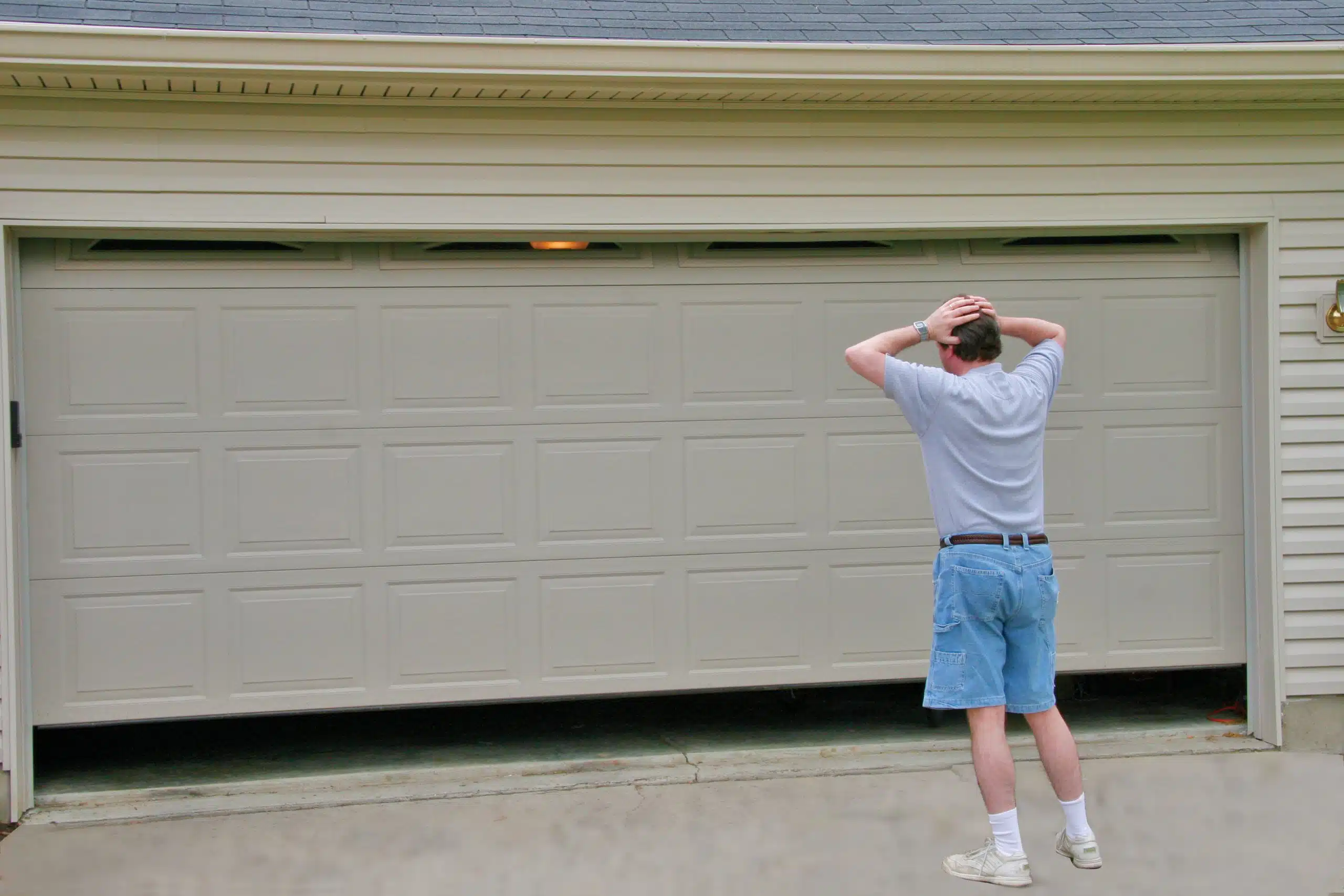
How One Balance Problem Leads to Multiple Failures
- Spring wear increases cable load, which accelerates cable fraying and raises the risk of sudden failure on both sides.
- Cable stress puts additional force on the drums, which develop grooves and misalignment that further destabilize the door’s movement.
- Track stress from uneven movement causes bracket loosening, which shifts the track and introduces new friction points into the system.
- Each new friction point or mechanical failure forces the opener to work harder, shortening its lifespan and increasing the chance of motor burnout.
Knowing the right time to step in is critical to stopping that chain reaction before it runs too far. Our guide on When Should You Balance Your Garage Door? Signs to Know gives homeowners a clear set of indicators to watch for so they can act before the damage compounds further.
Do Not Let One Problem Become Five
An off-balance garage door is never just one problem. It is the beginning of a chain reaction that works its way through springs, cables, openers, tracks, and panels, the longer it goes without attention. The good news is that catching it early gives you options. A professional balance adjustment at the right time is a straightforward repair. Waiting until components start failing makes it significantly more expensive and more disruptive.
If your garage door in Lawndale, NC, has been showing any of the signs, Cleveland County Garage Doors is here to help. Our experienced technicians can inspect your system, identify what is off, and get your door back to safe, reliable operation. Contact us or give us a call before a small balance issue turns into a much bigger repair.