
Your garage door system is often the main way you enter and leave your home, so you rely on it to work smoothly every day. When it suddenly fails because your garage door comes off track, it becomes more than an inconvenience, since the opener may stop working altogether and leave your home vulnerable. An off-track garage door is a serious problem, whether it occurs after an accidental impact or due to worn parts. Understanding why derailments happen and what follows can make a real difference, especially when your safety and your property are on the line.
It’s normal to worry about repair costs, but acting quickly with professional garage door repair services can prevent wider damage that becomes harder and more expensive to resolve. Getting the issue resolved promptly restores proper operation to the door and reliable function to the opener and the rest of the system, so your garage stays secure and everything runs as it should.
Common Signs of a Garage Door Off-Track Problem
Catching the early signs of a garage door off-track problem can spare you from bigger disruptions later, especially when small changes start showing up in the way the door moves or sounds. You might notice that it no longer opens or closes as smoothly as it used to, or that new noises appear during operation, which often point to track misalignment or internal parts starting to fail. Paying attention to these shifts matters because the sooner the warning signs are recognized, the easier it is to address the root cause before the situation escalates.
A clear visual clue is a noticeable gap between the rollers and the track, since that spacing usually means the door is no longer seated correctly and may derail further with continued use. Other warning signs include a door that looks slightly slanted or moves unevenly from side to side, because these changes typically signal that key components are no longer working together as they should. When these issues show up, they’re not just cosmetic or minor annoyances, as they often indicate that the system is under strain and needs attention before a full off-track failure occurs.
If you want a deeper look at the real risks behind these warning signs and how quickly an off-track situation can turn hazardous, check out our related post, “How Dangerous Is a Garage Door Off Track and When Should You Call for Repair?”
Jerky or Uneven Movement That Signals a Garage Door Track Door
When your garage door begins to shudder, hesitate, or travel unevenly, that behavior is often one of the earliest indicators that it may be shifting out of alignment. A properly working door should glide steadily along both tracks, so when movement turns jerky or the rollers seem to struggle, it usually points to a track that has bent, loosened, or drifted out of position. Because the rollers are designed to carry weight smoothly, anything that interferes with that path forces the system to work harder than it should.
Alignment and balance matter so much because the door’s weight depends on even support across both sides, which is why a problem on one side quickly affects the other. If a track is loose or a spring isn’t carrying load evenly, the door can begin lifting at an angle, placing extra pressure on rollers and hinges that weren’t meant to bear that strain alone. Once the door starts moving lopsided, the risk of a full derailment rises fast, since the rollers can slip out of the track under uneven load.
Ignoring uneven motion can turn a manageable issue into a sudden breakdown, because what starts as a minor shake can become a door that binds, stalls midway, or drops out of the rails. When the door seems to fight its own movement, it’s a sign that the system needs to be evaluated before the misalignment causes wider damage.
Grinding Noises and Roller Gaps Linked to Garage Door Off-Track Repair Needs
Unusual sounds such as grinding, scraping, or sharp popping during operation are major red flags, especially when they appear alongside a change in how the door feels while moving. These noises often happen when rollers no longer roll cleanly inside the track, causing friction that shouldn’t be there. Whether the trigger is alignment drift, track damage, or worn rollers, the meaning is the same: the system is under stress, and continued use can push the door fully off track.
Look for warning signs like:
- Grinding or scraping sounds that follow the door’s movement
- Rollers that sit unevenly or appear to “ride up” the track edge
- Visible gaps between rollers and rails as the door travels
When gaps and grinding show up together, it’s a strong signal that garage door off-track repair is needed before stability fails completely, especially if bottom seals are dragging unevenly and adding friction along the floor line. For safety and proper restoration, this type of issue is best handled by a trained technician, since derailments often involve heavy components under tension that require controlled adjustment.
Why Sudden Failures Lead to Garage Door Off-Track Repair
A sudden track failure is one of the most alarming problems a garage door can have, mostly because it doesn’t creep in gradually the way other issues do. Instead, it hits fast and with little warning, often leaving the door unable to move and the entire system unstable. When a critical part gives out under pressure, the rollers can slip out of the rails, and the door may hang at an angle that puts strain on everything around it, which is why the opener is no longer safe to operate once a derailment happens.
In many cases, these failures trace back to either a strong, unexpected force or a component that has weakened over time and finally breaks. Parts can slowly lose strength without obvious symptoms, until they reach a point where they can’t support the door’s weight or guide it smoothly along the track. Understanding the usual triggers behind sudden derailments helps you recognize what’s happening when a door fails abruptly, especially because off-track events rarely involve just one isolated issue.
For a closer look at what can happen when these triggers are ignored, take a minute to read our companion article, “Garage Door Off-Track Risks You Should Not Ignore.”
Impact or Force That Causes a Garage Door Off-Track Event
One of the most common reasons a garage door comes off its track is a sudden impact from outside, such as a vehicle bumping into the closed door. Even a low-speed hit can warp the track, damage a panel, or knock rollers out of position, which often leaves the door crooked, jammed, and unusable in a matter of seconds.
Impact problems aren’t limited to vehicles, either, since any hard obstruction or force applied while the door is moving can throw the system out of alignment. A heavy object caught under the door during closing can push the rollers against the rails in the wrong way, while forced entry or vandalism can bend the lower sections and twist the tracks. No matter the source, a strong, sudden load disrupts how the door travels, and that disruption can escalate quickly into a full off-track failure.
What makes impact damage especially serious is that it doesn’t always stop at the door itself, because the surrounding frame, mounting points, or even nearby property can take a hit as well. A door that looks only slightly bent can still have rails that are no longer true, which is why impact-related derailments typically require garage door off-track repair to restore safe, centered movement.
Track Drift and Hardware Wear Behind Garage Door Off-Track Repair Calls
Not every garage door off-track situation comes from a single dramatic event, because long-term use can also push the system toward derailment. With thousands of open-and-close cycles, vibration and stress can gradually loosen hardware, and when the track shifts even slightly, rollers start riding unevenly until they finally slip out. Once the rails no longer line up perfectly from top to bottom, the door begins to pull against itself, and that growing imbalance can end in a sudden track failure.
Wear-related derailments also tend to involve multiple components at once, since the door works as a connected system and may end up requiring emergency garage door repairs when the failure escalates without warning. When one part weakens, the load transfers to others, speeding up failure and increasing the chance of rollers leaving the track.
Common contributors behind this type of garage door off-track repair include:
- Worn rollers: Wheels can crack, flatten, or seize, preventing smooth travel and increasing the risk of derailment.
- Loose track hardware: Fasteners that hold the rails in place can back out over time, allowing the track to drift out of alignment.
- Damaged hinges: When hinges bend or wear down, sections of the door can shift position and push rollers out of their normal path.
Safety and Property Risks When a Garage Door Is Off Track
Safety becomes the immediate concern once a garage door goes off track, since the door’s weight and unstable position can turn a routine space into a hazard in seconds. When the rollers aren’t seated in the rails, the door may shift without warning or drop unevenly, which is why forcing it to move or standing in its path can be dangerous. The risk isn’t theoretical, either, because a door that has lost proper track support is no longer moving within the balanced system designed to keep it controlled.
Property exposure follows right behind the safety issue, especially when an off-track door can’t close securely or remains stuck open. That gap leaves the garage and anything inside it vulnerable to weather damage, theft, and accidental impact, while the strain from a single slipped roller can spread through the system and create wider structural problems. What starts as a derailment often escalates into a larger failure if the door is left unstable for too long.
If your door has a history of slipping out or you’re already dealing with repeat derailments, you’ll want to read our next guide, “Garage Door Off-Track Repair For Repeated Track Pop Outs.”
Damage Patterns That Worsen After a Garage Door Off-Track Incident
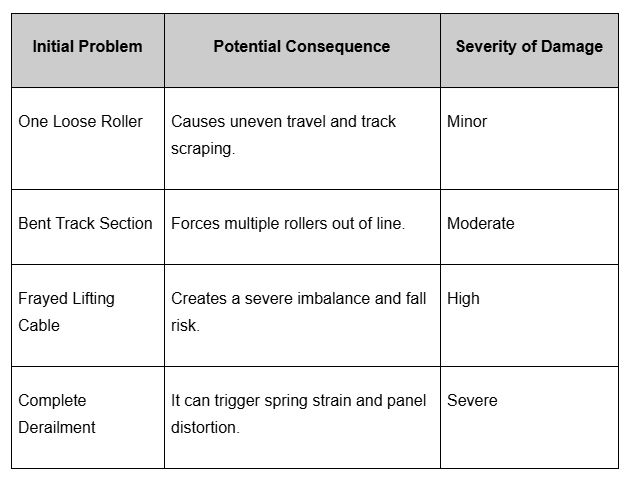
Further damage is almost inevitable when a garage door is off track, since the door is no longer traveling within its correct alignment and load path. Once that balance is disrupted, the door’s weight shifts unevenly across components, which increases stress on parts that weren’t meant to carry it alone. The longer the door remains misaligned, the more likely it becomes that the initial failure triggers additional breakdowns across the system, sometimes reaching a point where garage door replacement becomes the safest and most practical outcome.
Here’s how a small off-track issue can escalate:
Injury and Vehicle Hazards From an Unstable Garage Door Off-Track System
An off-track garage door creates a real risk for injury and vehicle damage, mainly because its movement is no longer predictable or controlled. With the rollers no longer guided by the rails, the door can tilt, bind, or fall abruptly, and the force involved is enough to cause severe harm when someone is nearby. High-tension components such as springs and cables are also under abnormal stress during derailments, which increases the danger if a failure occurs while the system is unstable.
Vehicles are at risk for similar reasons, since an off-track door can drop into the opening or lean into the driveway path without warning. A door that hangs unevenly may also become a hard obstruction, creating the potential for impact damage during entry or exit, and in severe cases, the damage may be extensive enough to require garage door installation rather than repair. Because safe operation isn’t reliable once the door leaves its tracks, keeping distance from the doorway and having the system corrected by a technician is the safest path forward.
Potential hazards tied to an unstable off-track door include:
- Crushing injuries caused by sudden door drops or shifts.
- Cuts and impact trauma if strained components snap or release force unpredictably.
- Vehicle dents or glass damage when a door falls or swings out of alignment.
- Structural damage around the opening of the door twists or collapses against the frame.
Choosing Garage Door Off Track Service Near Me to Fix Garage Door Off Track Issues
When a garage door comes off its track, searching for “garage door off track service near me” is the fastest way to get the situation under control, especially since this isn’t the kind of problem that should be handled without training. Off-track doors require experienced attention and proper equipment, not because the issue is hard to recognize, but because fixing them correctly depends on understanding what caused the derailment in the first place. Bringing in a reliable service means the door is repaired with a long-term solution in mind, rather than being pushed back into place only to fail again.
A skilled technician knows how to stabilize an off-track door and restore safe movement, while checking the rollers, cables, track alignment, and garage door openers for damage that isn’t always visible at first glance. What you’re really getting is a full system reset, since the goal isn’t just to get the door moving again, but to make sure it travels smoothly and stays centered the way it should. Choosing professional garage door off-track repair protects your home and reduces the chance of repeat failures, because the underlying strain that caused the derailment is addressed, along with the obvious track issue.
What Garage Door Off-Track Service Near Me Usually Addresses in One Visit
Off-track problems are best handled in a single comprehensive visit, because simply reseating rollers without confirming the cause often leads to the same failure returning. A professional starts by evaluating why the door left the track, then restores alignment and stability with the rest of the system in view, so the repair holds up under normal use. That full-picture approach matters because a derailment rarely happens in isolation, and hidden stress points can remain if the rest of the hardware isn’t checked.
In most cases, garage door off-track service near me appointments include work focused on areas such as:
- Safety stabilization and system shut-down checks, ensuring the door is supported and safe to handle during service.
- Track inspection and realignment, confirming both vertical and horizontal rails are straight, secure, and properly set.
- Roller and hinge condition assessment, identifying worn, damaged, or drifting parts that contributed to the off-track event.
- Cable, spring, and load-balance evaluation, verifying that the lifting support is even and the door runs smoothly without strain.
Handled this way, the service doesn’t just fix a garage door off track moment, but restores proper door travel and reduces the risk of another sudden derailment, which aligns with the system-wide safety focus outlined by the Building Safety Journal in its review of garage door provisions under the International Residential Code.
Why Technicians Are Best Equipped to Fix Garage Door Off Track Safely
A trained technician is the safest and most reliable choice when a garage door goes off track, because they understand how every part of the system works together and have the specialized equipment needed to restore proper alignment without adding new strain. Instead of only correcting what’s visible, they check for underlying issues that often travel with derailments, such as track drift, roller wear, or tension imbalances, so the repair holds up after normal use. Their safety training matters just as much as their tools, since handling heavy door panels and high-tension components requires controlled technique to prevent sudden shifts or injuries, which is why the job is best left to someone who can fix the problem correctly the first time while keeping your home secure.
Noticing when your garage door is off track matters more than many homeowners realize, because leaving it unresolved can lead to injury, property damage, and a system that no longer works the way it should. The most dependable way to handle the issue is by calling a garage door off-track service near you, since trained technicians have the skills to restore safe operation while addressing the causes that could make the problem return. Acting quickly once something feels wrong protects your home, reduces the chance of sudden failures, and helps your garage door last longer, especially when professional help steps in before the damage spreads.
When you’re ready to get the problem handled by a team that understands off-track emergencies from every angle, Cleveland County Garage Doors is a trusted local option for fast, careful service that puts safety and long-term performance first. If your door is leaning, grinding, or stuck mid-track, contact us today or give us a call and schedule your repair so your garage is secure and working smoothly again.
Frequently Asked Questions
Why did my garage door's off-track problem happen suddenly?
A garage door can come off track without much warning for two main reasons: either because a strong outside impact forces the rails out of alignment or because a worn component finally fails under the door’s weight. A vehicle bumping the door, even at low speed, can twist the track just enough for rollers to slip out, while aging rollers, cables, or hinges can break all at once after weakening over time. When either of these happens, the opener can’t guide the door safely, which is why the derailment often shows up right after what felt like a normal open or close.
How does a garage door off-track situation develop over time?
An off-track problem can also build gradually as parts wear down and alignment slowly drifts, especially when everyday vibration and repeated cycles loosen hardware over time. Rollers can lose smooth movement, tracks can collect rust or debris, and small shifts in the rail position can add up until the door starts traveling unevenly. Once that imbalance reaches a tipping point, a roller may slip out of the track, and the door can bind or derail, even if nothing dramatic happened in that moment.
Why does my garage door's off-track issue keep coming back?
When a garage door keeps coming off track, it usually means the original cause wasn’t fully corrected, since reseating a roller without restoring alignment allows the same stress to return. A slightly bent rail, drifting brackets, or uneven lift force from one side of the system can keep pushing the door out of its proper path. Lasting stability comes from addressing those underlying alignment and balance problems, because small distortions that are left alone tend to grow into repeat derailments.
Why do rollers fail and lead to garage door off-track repair needs?
Rollers fail for predictable reasons, mostly tied to time, friction, and exposure, since constant movement gradually wears their internal bearings and surfaces. Without smooth rolling action, they can seize, crack, or grind against the track, and moisture can speed that process by causing rust that restricts movement even more. Once one roller starts failing, the extra load shifts to the others and increases strain across the track, which makes a derailment much more likely, especially when hinge wear or track gaps give rollers room to slip out.
Is it safe to use a home entry when the garage door is off track?
It isn’t safe to use the garage doorway when the door is off track, because an unstable door can shift or fall without warning due to its weight and uneven support. As noted by Wikipedia, garage doors are heavy mechanical systems that rely on precise track guidance to move safely, which means a derailment immediately increases the risk of sudden movement or collapse. The safest approach is to keep the area clear and avoid operating the door until it has been stabilized and repaired, since moving through that opening or trying to use the system can expose people and property to unnecessary risk.
Can track misalignment worsen damage and require garage door off-track repair?
Yes, misalignment almost always makes the situation worse, because the door’s weight no longer travels along a centered, balanced path and begins stressing components unevenly. As the rollers pull against a drifting rail, the track can bend further, panels can twist under pressure, and lift cables or springs can take on abnormal loads. Left unresolved, that imbalance spreads damage across the system, turning a correction into a broader garage door off-track repair.
What are the early warning signs before a garage door off-track event?
Early warnings usually show up in movement and sound, since a door that’s starting to drift rarely stays quiet or smooth. Grinding, scraping, or popping noises can signal rollers rubbing the rails instead of rolling cleanly, while jerky travel or a door that looks slightly crooked suggests alignment is slipping. Visible gaps at the rollers, dents along the track, or uneven spacing in the rails are also strong indicators that an off-track event may be approaching.
When should I contact garage door off-track service near me for help?
You should contact a garage door off-track service near you as soon as you notice the door has derailed or shows clear signs of instability, such as leaning, sticking, or moving unevenly. Off-track doors carry real safety risks and can cause added damage if left in operation, so prompt professional attention is the best way to protect the system and restore safe use.
What causes a derailment that makes a garage door off track?
Derailments usually come from either sudden force or gradual wear reaching a breaking point, since both can disrupt the track path enough for rollers to escape. A hard impact can bend rails instantly, while weakened rollers, cables, or hinges can fail after long use, and either situation can knock the door out of its guided travel. Obstructions in the rail path, track damage, or deliberate force against the door can also contribute, though the underlying theme is the same: the system loses alignment, and the rollers no longer stay seated.
Why do sudden track failures mean it’s time to fix garage door off-track issues professionally?
A sudden track failure signals that the system has reached an unsafe state, because a door that has lost its guided support can drop, twist, or strain high-tension components in unpredictable ways. Professional repair matters in these moments since technicians.