
If your garage door doesn’t reverse when it hits an obstruction, your remote uses a fixed code instead of a rolling code, or it lacks a clearly accessible manual release, your door is missing safety features that have become standard on newer systems. These gaps aren’t cosmetic. They affect real safety and security, and on doors old enough to lack them from the factory, they usually can’t be added without a garage door replacement that covers both the door and opener together.
Key Takeaways
- Auto-reverse sensors have been required on residential garage door openers since 1993 under UL 325.
- A fixed-code remote can potentially be captured and reused; rolling code changes with every use.
- Every door should have a clearly marked, accessible manual release for emergencies.
- Pinch-resistant panel design reduces finger and hand injury risk, especially with children in the home.
- These features are often bundled with the door and opener as a matched system on older installs, which is why replacement, not a partial upgrade, is usually the practical fix.
If you’re weighing whether to repair or replace, read When Should You Replace Your Garage Door? 8 Signs It’s Time. It walks through the exact signs that mean it’s time to stop patching and start planning a replacement.
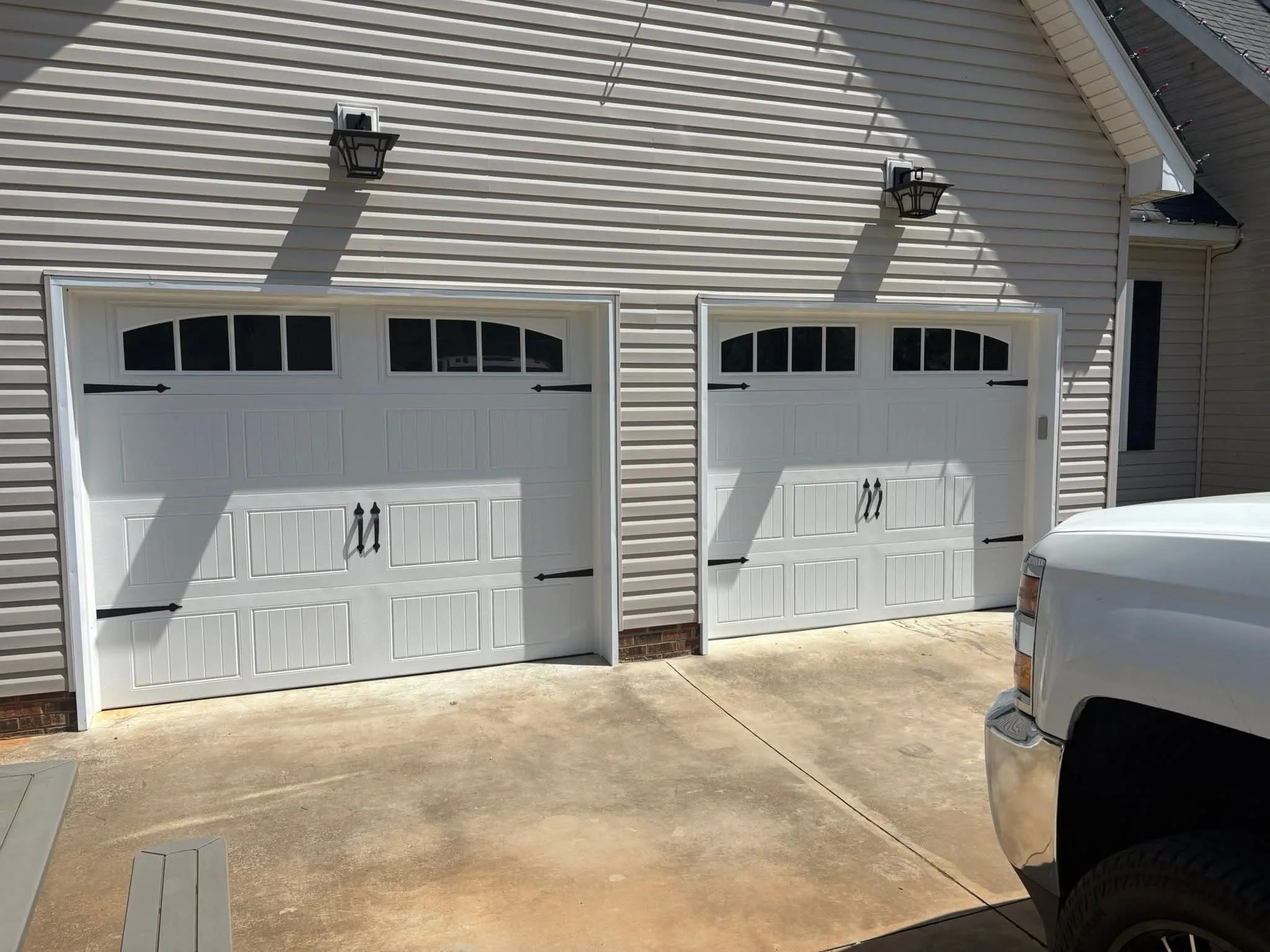
Modern Safety Features vs. What Older Doors Often Lack
Feature | Standard on Newer Systems | Often Missing on Older Doors |
Obstruction detection | Auto-reverse sensors (required since 1993) | Missing, failed, or misaligned |
Remote security | Rolling code | Fixed code |
Emergency access | Clearly marked, accessible manual release | Missing, painted over, or hard to reach |
Panel design | Pinch-resistant, rounded seams | Flat seams, higher pinch risk |
Monitoring | Vacation lock, app alerts | None |
Spring safety | Containment cables | Often absent |
Why These Features Are Often Bundled with the Opener, Not Just the Door
Most of the gaps on this list aren’t things you can bolt onto an old door in isolation. Auto-reverse depends on sensors wired into the opener’s logic board. Rolling code depends on the opener’s receiver, not just the remote. Containment cables depend on the spring system the door was originally engineered around. On a door old enough to lack these features from the factory, the door and opener were almost always installed together and have been aging as one unit ever since, which is why a full replacement, rather than a single upgraded part, is usually the more practical and cost-effective fix.
No Working Auto-Reverse Safety Sensors
Auto-reverse sensors stop and reverse the door if something, whether that’s a person, a pet, or a car bumper, blocks its path while closing. Federal safety standards (UL 325) have required this on residential openers since 1993, but sensors on older systems can fail, become misaligned, or simply be missing on doors installed before the requirement.
UL Solutions’ overview of how automatic garage door standards help keep people safe explains why this requirement exists and what it’s meant to prevent.
Why Missing Auto-Reverse Sensors Are a Serious Garage Door Safety Gap
Test this yourself:
- Place a solid object, like a piece of wood, in the door’s path while it’s closing
- Watch for a stop and reverse before the door makes contact with the object
- If it doesn’t stop and reverse, treat this as urgent, not optional
- This is one of the most direct injury risks a garage door can pose, so don’t wait on a fix
How UL 325 Changed Residential Garage Door Safety
Before 1993, auto-reverse wasn’t a federal requirement, which means plenty of doors installed in the decades before then were never built with it at all. The standard came about after a string of injuries and deaths involving children and pets caught under closing doors, and it fundamentally changed how openers are engineered, not just what sensors get added on. That’s part of why a door old enough to predate the standard often needs more than a sensor bolted on: the opener’s underlying logic may never have been designed to support one in the first place.
Fixed-Code Remote Instead of Rolling Code
Older remotes send the same signal every time you press the button. That fixed code can potentially be captured by a nearby scanning device and replayed later to open your door without your knowledge. Rolling-code technology generates a new code with every use, closing that gap. DASMA’s guide to garage door openers covers this distinction in more depth, along with other opener safety basics worth knowing.
How to Tell If Your Garage Door Remote Uses Outdated Fixed-Code Technology
If your remote is more than 15 to 20 years old, or came with the door when it was originally installed decades ago, it’s worth having a technician confirm whether it’s rolling code.
For more on how a door’s age tends to affect the whole system, not just the remote, read our guide, How Long Does a Garage Door Really Last? 5 Signs Your Door Is Past Its Prime. This is one of our most common security-related findings on older systems, and it’s a straightforward one to fix by upgrading the opener or remote.
No Clearly Accessible Manual Release
Every garage door should have a manual release, usually a red cord hanging from the opener trolley, that lets you disconnect the door from the opener during a power outage or emergency. On some older installations, this release is missing, painted over, or positioned somewhere it can’t be reached safely.
Why an Inaccessible Manual Release Matters More Than Homeowners Expect
In our experience, this becomes a real problem exactly when you need it most: during a power outage, with a car trapped inside or outside. If you can’t locate or reach your release cord right now, that’s worth addressing before it becomes an emergency instead of a planned fix.
Missing Pinch-Resistant Panel Design
Older garage door panels were often built with flat, straight seams between sections, which can pinch fingers as the door moves. Modern pinch-resistant panels are shaped to keep gaps rounded and less likely to catch fingers, a meaningful difference in homes with children.
How to Know If Your Garage Door Panels Are Pinch-Resistant
A quick visual check tells you which design you have:
- Rounded, staggered seams where panels meet indicate a pinch-resistant design
- A straight, flush seam between panels means the door predates this design standard
- Young children using the garage regularly make this a more urgent factor to weigh
- Unsure what to look for? A technician can confirm it during any routine visit
No Vacation Lock or Remote Monitoring Features
Modern openers often include a vacation lock (disabling remote access while you’re away) and smartphone monitoring or alerts when the door opens or closes unexpectedly. Older systems typically have none of this, leaving you with no way to confirm the door’s status remotely. A garage door service repair technician can tell you whether your existing opener supports a smart controller add-on, or whether the hardware is too old to support one at all.
Why Missing Remote Monitoring Is a Growing Security Gap on Older Garage Doors
This isn’t a legally required feature the way auto-reverse is, but it’s increasingly something homeowners expect, and its absence means you have no way to know if the door was left open by mistake until you’re physically home to check.
Frayed or Exposed Springs and Cables Without Containment
Newer systems often include containment cables or spring safety cables that keep a broken spring or cable from becoming a projectile. On older doors, especially ones that have never had this added, a spring failure can release a significant amount of stored energy without anything to contain it.
If springs or cables have already needed repair more than once, that pattern is worth weighing alongside this safety gap; read our guide, How Many Repairs Are Too Many? 4 Signs Your Garage Door Is Beyond Fixing.
How to Tell If Your Garage Door Springs Need Safety Containment Cables
A technician can check in a few minutes whether your springs have containment cables installed. If they don’t, this is one of the more serious safety gaps on this list, since it directly affects what happens if a spring fails while someone is nearby. Never attempt to inspect or adjust springs yourself; this should always be handled by a licensed technician.
What to Do If Your Door Is Missing Several of These Features at Once
Finding one gap on this list is worth a conversation with a technician. Finding three or four at once is a stronger signal that the door and opener, as a system, predate most of modern safety engineering. In that situation, patching in individual features piecemeal often costs more in the long run than addressing the whole system together, since many of these upgrades depend on parts of the opener or door that aren’t compatible with newer add-ons. This is different from routine garage door maintenance, which keeps an otherwise sound system running smoothly rather than closing safety gaps built into an older design. An honest inspection can tell you which gaps are urgent, which can wait, and whether a full replacement is genuinely the more practical path forward.
Close the Gap Before It Costs You
Missing safety features aren’t cosmetic gaps. Several of them directly affect the risk of injury or unauthorized access. Because these features are often built into the door and opener as a matched system on older installs, a full replacement is usually the most practical way to bring your garage door up to modern safety standards.
Cleveland County Garage Doors can schedule a free safety inspection and give you a clear, honest read on where your door stands. Contact us or give us a call to have a technician check your door against today’s safety standards.