
There is a moment in most garage door spring situations where a homeowner has to make a judgment call. Is this something to monitor, or does it need a professional right now? Getting that call wrong in either direction has real consequences. Wait too long, and a manageable issue becomes a full system failure. Act too soon, and you might feel like you overreacted.
This guide takes the guesswork out of that decision. Each section covers a specific situation where calling a trained technician is the right move, what makes it different from something you can monitor on your own, and why attempting broken garage door spring repair without professional training creates risks that are not worth taking.
The Spring Has Visibly Broken or Shows a Clear Gap in the Coil
This one is not a judgment call. A torsion spring with a visible gap, a clear separation in the coil, or a break anywhere along its length needs to be replaced by a professional. There is no safe workaround and no repair that restores a broken spring to working condition.
A broken torsion spring is still under partial tension in the sections that remain intact. That residual energy makes the spring unpredictable if touched or disturbed. Combined with the weight of an unsupported door, the situation carries real injury potential for anyone without proper tools and training.
Why a professional is required:
- Torsion spring replacement involves winding and unwinding steel coils under hundreds of pounds of tension using specialized winding bars and techniques.
- A mistake during installation, including incorrect tension setting or improper seating on the shaft, can cause the spring to fail immediately or damage the cables and drums.
- A technician will also inspect the cables, drums, and opener during the same visit to confirm that no secondary damage occurred when the spring broke.
Tip: Do not attempt to use the door at all once you have confirmed the spring is broken. Even a single-use attempt can cause the cables to slip off the drums or the door to drop unexpectedly.
If you are still piecing together what is going on with your door, start with the Signs Your Residential Garage Door Torsion Spring Is About to Break before deciding on the next steps.
The Door Is Visibly Uneven When Opening or Closing
A garage door that tilts to one side as it moves is a mechanical problem that goes beyond a simple adjustment. The source could be spring tension loss, a frayed or slipped cable, a drum out of alignment, or some combination. Each has a different solution, and adjusting cables or spring tension without knowing which issue is actually present can make things significantly worse.
Why is a professional required:
- Cable tension and spring tension are interconnected. Adjusting one without accounting for the other throws the system further off balance.
- Drum alignment issues require tools and reference points that most homeowners do not have.
- A technician identifies whether the unevenness is a single-component issue or a system-wide problem.
Tip: Note which side sits higher and whether the unevenness is worse at the start of the cycle or midway through. That detail helps a technician narrow down the cause faster.
The Door Fails the Balance Test
The balance test is one of the simplest checks a homeowner can perform on their own. Disconnect the opener, lift the door manually to about waist height, and release it. A properly balanced door stays in place. A door that drops to the floor or shoots upward has a spring tension problem.
If your door fails this test, that result alone is enough reason to call a professional. The balance test does not just indicate a worn spring. It confirms the spring is no longer providing the counterbalance the system was designed around, and operating the door in that condition adds wear to every other component with each use.
Why a professional is required:
- Correcting door balance requires adjusting spring tension to match the door’s specific weight and travel distance.
- Spring tension adjustment is done with winding bars on a live spring, which is not safe without proper tools and experience.
- A technician also checks whether the imbalance is purely spring-related or whether cables and drums are contributing.
Tip: Run the balance test once or twice a year. Catching an imbalance before it leads to full spring failure is one of the most practical maintenance habits a homeowner can build.
The standards behind balance and tension requirements for residential door systems are outlined in ULSE’s guide to automatic garage door safety standards, which explains how those benchmarks protect homeowners.
You Hear Grinding, Popping, or Cracking Sounds During Operation
Not all garage door sounds mean the same thing. A light squeak during operation usually just means the spring or rollers need lubrication, and that is something a homeowner can address. But grinding, loud popping, or cracking sounds during the opening or closing cycle are a different matter entirely.
Those sounds typically indicate metal components are under stress they were not designed to handle, something is rubbing or binding that should not be, or a component is close to a structural failure point. Continuing to operate the door when those sounds are present accelerates damage and can turn a simple repair into a much more expensive one.
Why a professional is required:
- Grinding near the spring shaft can indicate coil separation, bearing wear, or a cable beginning to bind around the drum.
- Popping or cracking during operation signals uneven stress in the spring, which is a precursor to a sudden break.
- A technician isolates where the sound originates and identifies the specific component before it reaches failure.
Tip: Use your phone to record a short video of the door operating when the sound occurs. That recording can help a technician pinpoint the source faster, especially if the sound is intermittent.
The Spring or Surrounding Components Show Heavy Rust or Corrosion
Light surface rust on a torsion spring can sometimes be managed with regular lubrication, and a homeowner can apply that safely. But heavy corrosion, rust spread across most of the coil length, flaking metal, or rust that has reached the cable hardware or drums needs professional assessment.
Corrosion weakens the spring’s structural integrity at a rate that is difficult to judge by eye. A spring that looks moderately rusty may already be significantly compromised internally. In Lawndale, NC, where seasonal humidity is a consistent factor, torsion springs face corrosion conditions more often than in drier regions.
Why a professional is required:
- A technician assesses whether corrosion has compromised the spring enough for immediate replacement or whether monitoring is still reasonable.
- Rust that has spread to cable hardware or drum components requires a broader inspection beyond just the spring.
- Attempting to treat a heavily corroded spring without knowing its current condition risks triggering a failure during the process.
Tip: Check the spring coils visually two to three times a year. If rust is progressing between checks, report it to a technician sooner rather than later.
The Opener Keeps Reversing or Straining Without a Clear Sensor Cause
Garage door openers have built-in resistance detection that causes the door to reverse when the opener senses more load than expected. When this happens consistently and the safety sensors are clean, aligned, and unobstructed, the cause is usually mechanical rather than electronic.
A spring that has lost significant tension forces the opener to work against a heavier load than it was designed for. The opener detects that resistance and reverses to protect itself. Continuing to adjust opener settings to compensate for a weak spring masks the problem and shortens the motor’s life.
Why a professional is required:
- Diagnosing whether the reversal is caused by spring tension, cable friction, track misalignment, or opener sensitivity requires hands-on assessment.
- Adjusting force settings to work around a weak spring adds strain to the motor without solving the root issue.
- A technician identifies the actual cause and addresses it directly.
Tip: Note whether the reversal happens at a consistent point in the cycle or randomly. Consistent reversals at the same spot usually point to a mechanical cause. Random reversals are more likely sensor or opener-related.
The System Has Not Been Serviced in More Than Two Years
Most homeowners do not schedule garage door maintenance until something stops working. That approach means most systems run for years with no professional eyes on the spring, cables, rollers, and hardware keeping the door functioning safely.
A torsion spring approaching its cycle limit, showing early rust, or losing tension does not always produce obvious symptoms. A routine professional inspection every one to two years catches those developing issues before they become service calls.
Why a professional is required:
- A technician can assess spring wear, cable condition, and hardware integrity in ways a visual check alone cannot reveal.
- Tension testing, coil inspection, and balance verification require trade-specific tools and reference knowledge.
- Catching a spring a few cycles of seasonal stress away from failing is far less disruptive than dealing with a sudden failure.
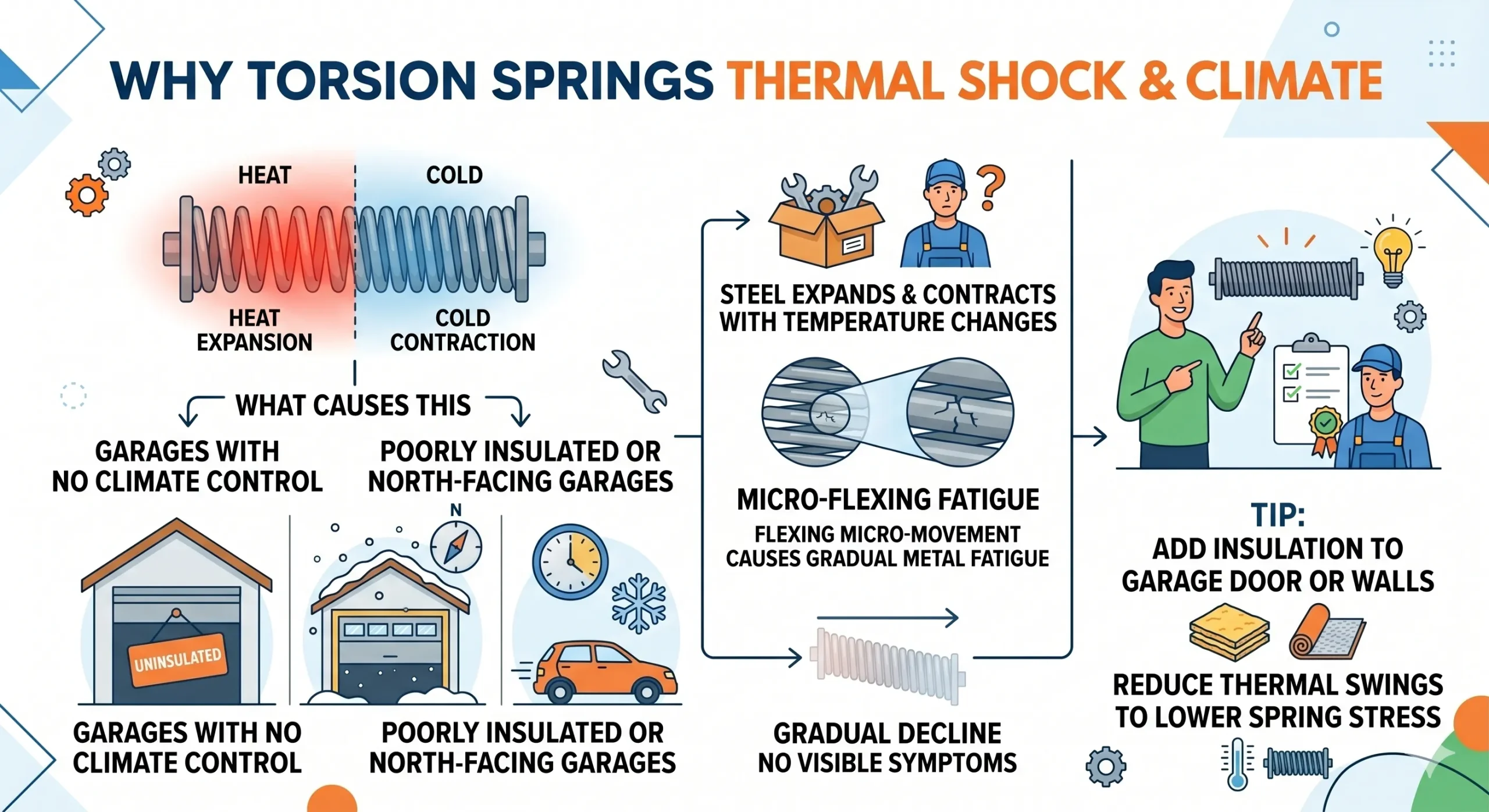
Tip: Schedule an inspection in the fall before winter arrives. Temperature drops stress spring metal, and heading into colder months with a worn spring increases the chance of failure when you need the door most.
The IDA’s care and maintenance directory can help homeowners locate qualified technicians for routine inspections and seasonal service.
If you want to be prepared for emergencies, read What Happens When a Garage Door Spring Snaps at Home.
You Are Considering a DIY Spring Replacement After Watching Online Videos
Torsion spring replacement is the one garage door repair that professionals consistently flag as the highest injury risk for untrained homeowners. The combination of high stored tension, specialized tools required, and the consequences of a mistake puts this in a different category from most home repair tasks.
Online tutorials make it look more manageable than it is, partly because the people filming them have done it many times with the right equipment, and partly because the consequences of what goes wrong do not always make it into the video.
Why is a professional required:
- Winding a torsion spring requires specific winding bars sized to the spring and shaft. Using improvised tools is a known cause of serious hand and arm injuries.
- An incorrectly tensioned spring can unwind suddenly during or after installation with enough force to cause significant injury.
- A professional knows the correct wind count for your specific spring and door weight and verifies the result with a balance test before leaving.
Tip: When you factor in potential door damage, opener damage, and medical costs, booking a garage door repair service from the start is almost always the more practical and safer choice.
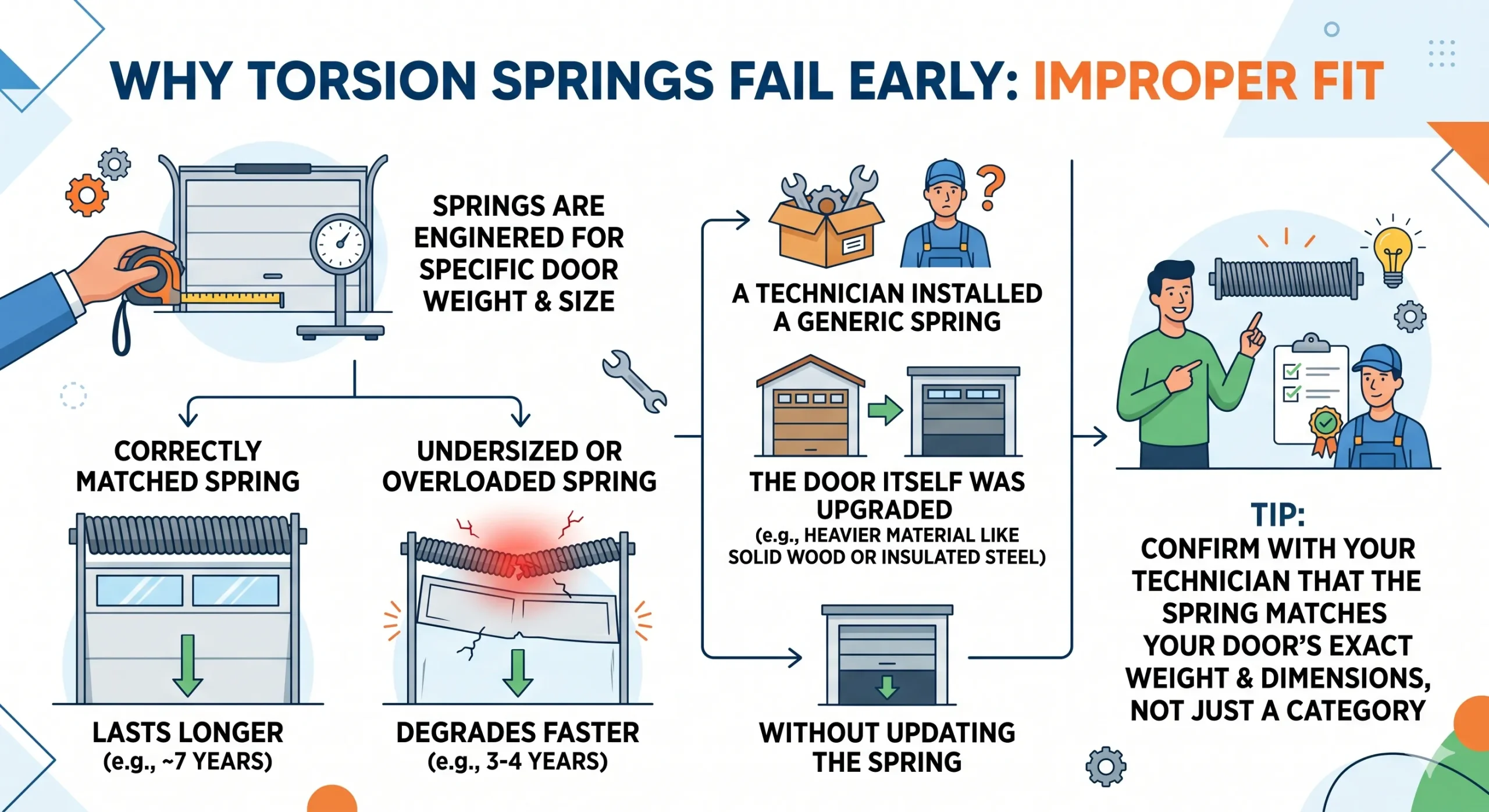
To understand what shortens your spring’s lifespan, read Why Garage Door Torsion Springs Fail Sooner Than Expected.
Trust the Situation, Not Just the Budget
Garage door repairs have a reputation for being expensive, and that makes some homeowners hesitant to call until they are certain they need help. But with torsion springs specifically, the cost of waiting or attempting a DIY solution almost always exceeds the cost of calling a professional when the situation first presents itself.
Homeowners across Lawndale, NC, and Cleveland County can count on Cleveland County Garage Doors for professional torsion spring service. Whether you are dealing with a broken spring, a door behaving strangely, or just want a routine inspection before the season changes, contact us or give us a call today, and we will make sure your door is safe and working properly.