
A garage door that starts to close and then reverses is doing exactly what it was designed to do: stopping before it hits something. The four most common triggers are photo-eye sensors detecting an obstruction, a force or sensitivity setting that’s too sensitive, resistance somewhere along the track, and a limit setting that doesn’t match how far the door actually needs to travel. Reversing under these conditions is a safety feature, required by law on residential openers, so the fix is almost never to disable it. The fix is finding out what’s actually triggering it, and working through these four causes in order usually gets you there quickly, often without needing garage door service repair at all.
Key Takeaways
- Reversing mid-close is a safety feature working correctly, not a sign the door is broken.
- Photo-eye sensors are the most common trigger, even for something as small as debris in the beam.
- A force setting that’s too sensitive can cause the door to reverse from normal friction alone.
- Resistance on the track, from dirt, a bent rail, or worn rollers, can trigger the same reversal.
- An incorrect limit setting can make the door reverse before it ever reaches the floor.
- Never disable the reversing feature to “fix” the problem. It exists to prevent injury, and removing it can create real liability.
What’s Triggering the Reverse vs. What to Check
Before assuming the opener itself is failing, it helps to narrow down which of these four triggers actually matches what you’re seeing. The table below lines up the pattern with the most likely cause.
Possible Trigger | What It Looks Like | What to Check First |
Sensor obstruction | Reverses at the same point every time | Clean and realign both sensors |
Force set too high | Reverses inconsistently, sometimes fine | The opener’s force adjustment dial |
Track resistance | Reverses with a jerk or hesitation | Track for dirt, dents, or worn rollers |
Limit setting off | Reverses before reaching the floor | The opener’s limit adjustment screw |
1. The Photo-Eye Sensors Are Detecting an Obstruction
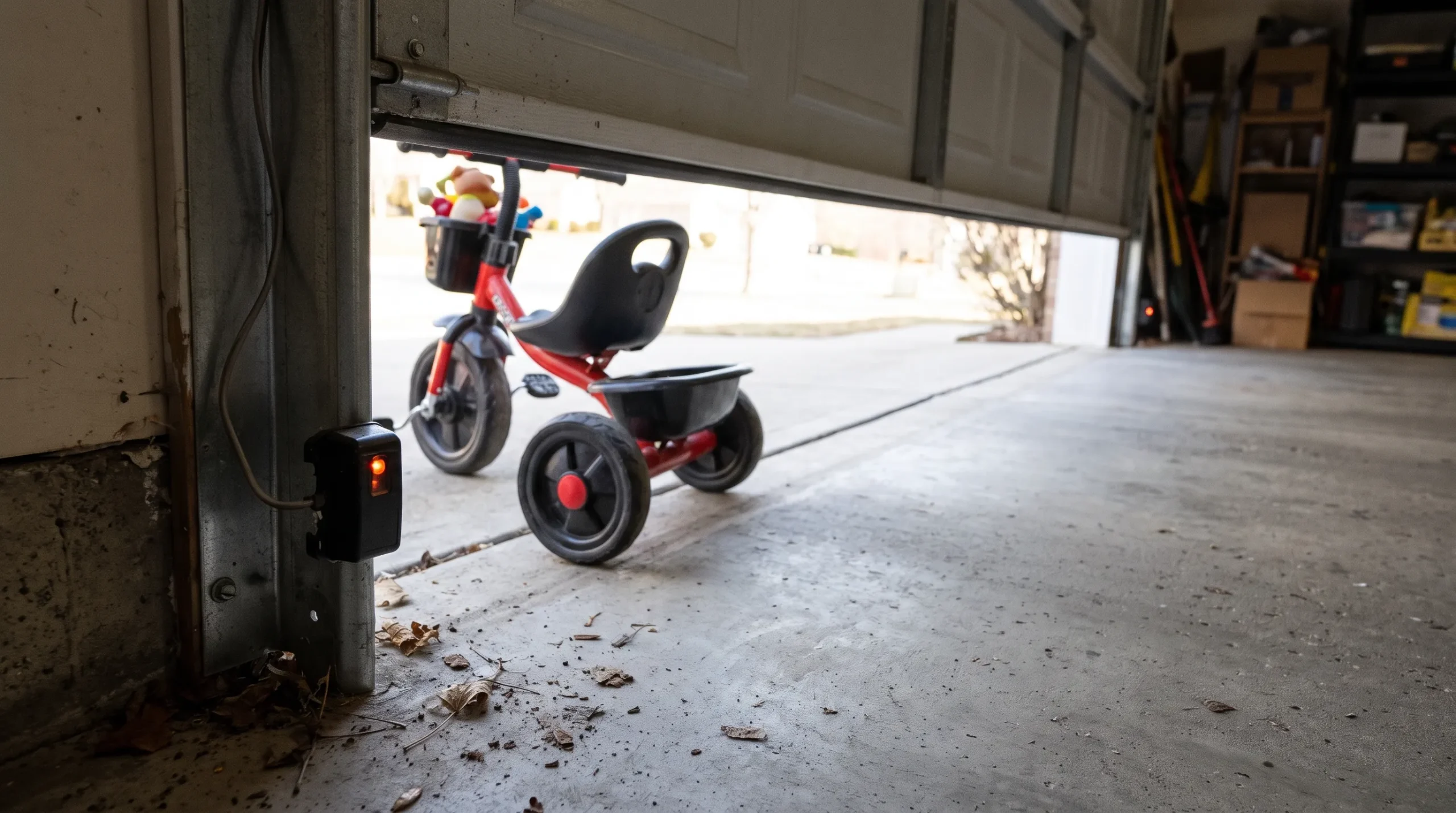
A door reversing at the same spot every time usually points straight back to whatever the sensors are picking up.
How to Identify What’s Triggering Your Garage Door’s Sensors
If the door reverses at roughly the same point every time, the photo-eye sensors are the most likely trigger. Something, even something small, is sitting in or near the beam, and the door is doing exactly what it’s supposed to do by refusing to close on it.
Check:
- Look along the full width of the doorway for anything in the sensor’s path.
- Clean both sensor lenses, since dust and cobwebs can look like an obstruction to the sensor.
- Confirm both sensors are aligned and facing each other directly.
Sensor obstructions cause more reversal complaints than any of the other three triggers on this list, so it’s worth checking first.
Call a pro if the path and sensors are clear and the door still reverses at the same spot. If the door won’t stay closed at all and it’s affecting your home’s security, emergency garage door repair can resolve it the same day.
If you want a deeper walkthrough of sensor and alignment issues specifically, read Why Won’t My Garage Door Close All the Way? 5 Sensor and Alignment Issues to Check.
2. The Force or Sensitivity Setting Is Too High
Sometimes the door isn’t detecting an obstruction at all; it’s simply set to reverse too easily.
How to Adjust Garage Door Opener Force Settings
Openers are built to reverse when they meet resistance, which is exactly the safety behavior you want. But if the sensitivity is adjusted too high, even the door’s normal friction against the track can be enough to trigger a reversal. Most opener manuals label this dial with a numbered scale or a simple plus-and-minus range, and moving it even one notch can noticeably change how the door behaves.
Check:
- Locate the force or sensitivity adjustment dial on the opener unit, usually near the motor housing.
- Make a small adjustment and test a full close cycle before adjusting again.
- Confirm the door still reverses appropriately when it meets a real obstruction, since this feature should never be disabled.
Per IDA’s safety and maintenance guidance, homeowners can test this monthly by placing a piece of wood in the door’s path and confirming it reverses on contact, which helps catch a setting that has drifted too sensitive or not sensitive enough. A door that reverses too easily is inconvenient, but a door that doesn’t reverse at all is dangerous, so this test is worth the few minutes it takes.
Call a pro if adjusting the sensitivity doesn’t resolve the reversal, or you’re unsure how far to adjust it.
3. The Door Hits Resistance on the Track
A door can trigger its own reversal without any outside obstruction if the track itself is creating friction.
How to Check for Track Resistance Causing a Garage Door to Reverse
A door doesn’t need an actual obstruction to trigger a reversal. Dirt buildup, a slightly bent track, or worn rollers can create enough resistance that the opener interprets it the same way it would an obstruction, even though nothing is technically blocking the doorway.
Check:
- Inspect the tracks for visible buildup, rust, or bends.
- Watch the rollers as the door moves. They should travel smoothly without catching.
- Listen for grinding or scraping sounds, which often point to track or roller wear.
For a step-by-step way to test this yourself, Angi’s garage door inspection guide walks through checking the track, rollers, and auto-reversal function as part of a routine inspection. Catching track wear early is usually far cheaper than waiting until it affects the rollers or the opener itself, and scheduling regular garage door maintenance is the easiest way to stay ahead of it.
Call a pro if the track shows visible damage, or if straightening or cleaning it doesn’t resolve the reversal.
4. The Limit Setting Doesn’t Match the Door’s Full Travel
An outdated limit setting can make a perfectly healthy door behave as if something is in its way.
How to Fix a Garage Door Limit Setting That Causes Reversal
The limit setting tells the opener how far the door should travel before stopping. If that setting is off, even slightly, the opener may interpret the door reaching the floor as hitting an obstruction, and reverse it accordingly, even on a door that’s otherwise in perfect working order.
Check:
- Locate the limit adjustment screw or dial on the opener unit.
- Make small adjustments, testing after each change, rather than large corrections all at once.
- Confirm the door reaches the floor fully without straining against the limit.
A limit-setting cause is easy to overlook because the door genuinely doesn’t have anything blocking it. The opener simply thinks it has, based on a setting that no longer matches reality.
Call a pro if the door still won’t reach the floor after a small adjustment, or if the reversal happens at an inconsistent point each time.
If the remote itself seems to be the problem rather than the door’s behavior, read Why Is My Garage Door Remote Not Closing the Door? 6 Troubleshooting Steps.
If you also want to see the broader list of causes behind a door that won’t close at all, read Why Is My Garage Door Not Closing? 7 Common Causes and Fixes.
A Reversing Door Is Doing Its Job
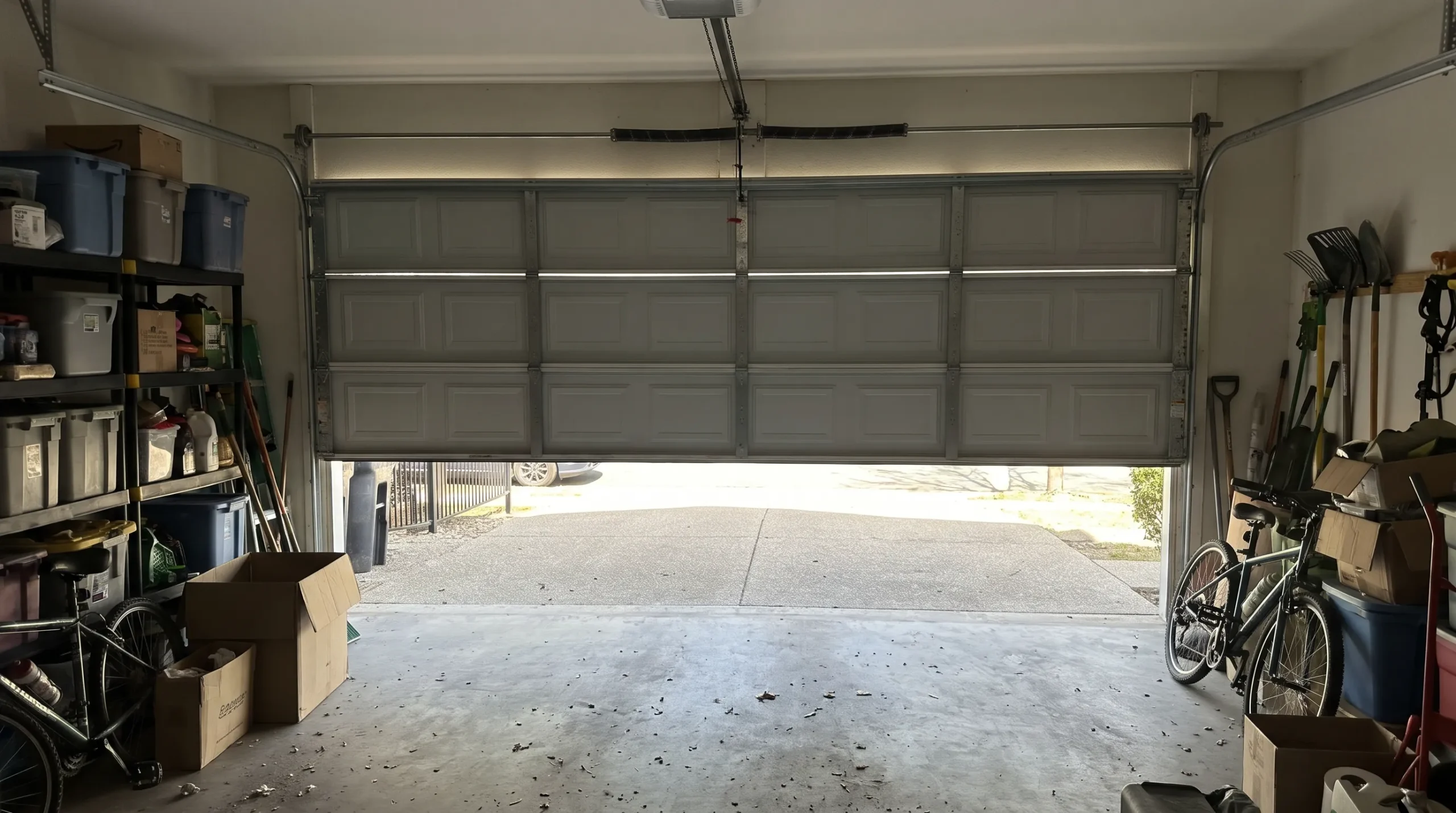
It can feel like the door is malfunctioning when it reverses instead of closing, but in almost every case, it’s the safety system working exactly as intended. The real question is what’s triggering it, not how to stop it from happening, and that distinction changes how you should approach the fix.
Cleveland County Garage Doors diagnoses and fixes reversal issues for homeowners across Cleveland County, including Shelby and Kings Mountain, and we can usually pinpoint the trigger in a single visit. Contact us or give us a call if your door keeps reversing and these checks haven’t solved it.