
A residential garage door torsion spring is built to handle thousands of open-and-close cycles. Most standard springs are rated for around 10,000 cycles, and higher-grade options can go well beyond that. So when a spring gives out after just a few years, it is fair to ask what went wrong.
The answer is rarely just bad luck. Early spring failure almost always has a root cause, and in most cases, it is something that could have been slowed down or prevented with the right information. Understanding why springs fail prematurely also helps homeowners recognize when broken garage door spring repair is the immediate need versus when a longer-term repair like upgrading to a higher-cycle spring, makes more sense. This guide breaks down the most common reasons torsion springs wear out ahead of schedule and what homeowners in Lawndale, NC, can do about it.
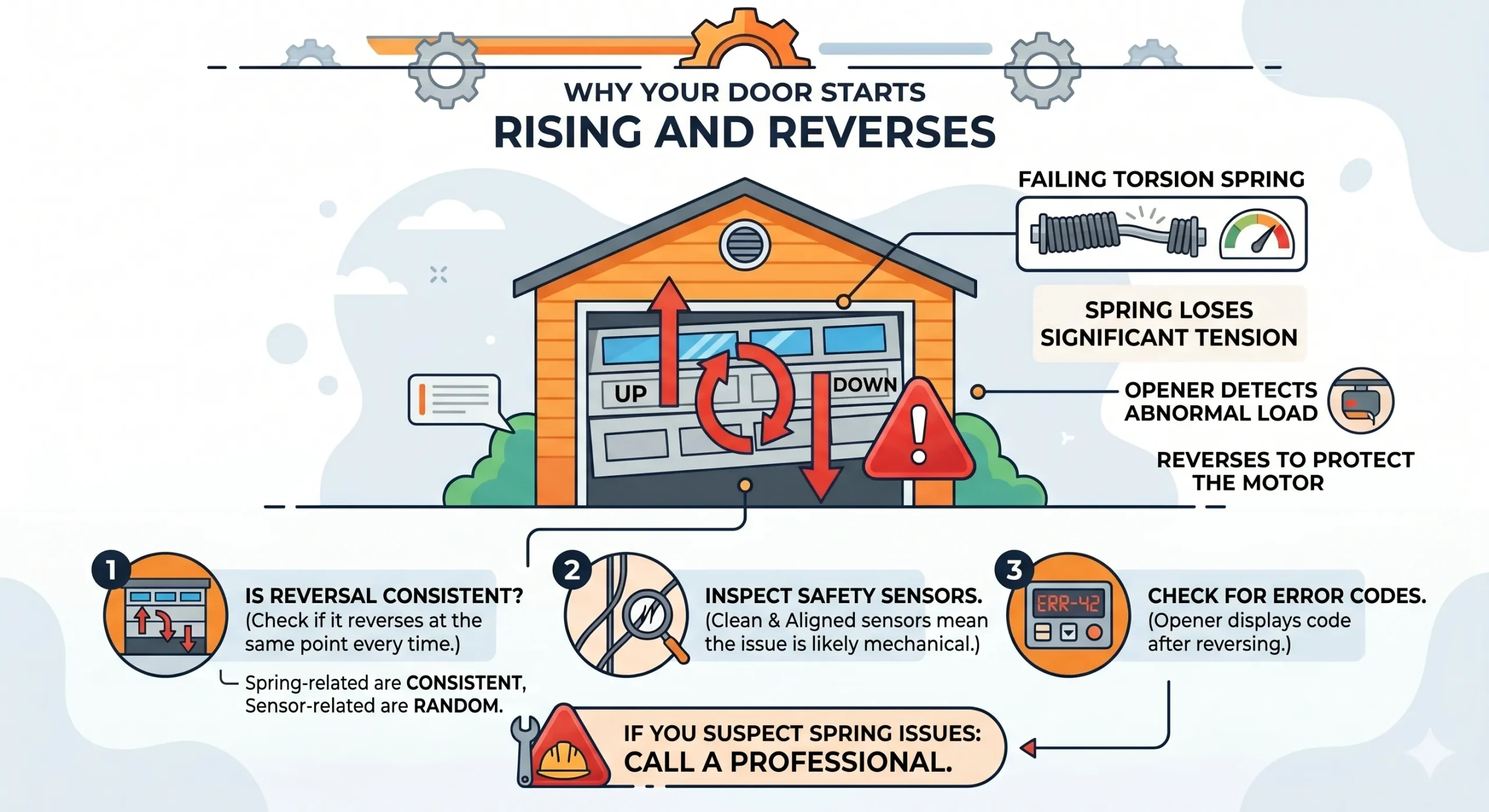
The Spring Was Not the Right Size for the Door
One of the most common reasons a torsion spring fails early is that it was never the right fit for the door in the first place. Springs are engineered to specific door weights and heights. When a spring is undersized or carries more load than it was designed for, every single cycle puts more stress on the metal than intended.
That stress compounds over time. A spring working at the edge of its capacity degrades significantly faster than one operating within its design range. What should have lasted seven years might only make it to three or four.
What causes this:
- A previous technician installed a generic spring instead of one matched to the door’s exact weight and size.
- The door itself was replaced or upgraded without updating the spring to match the new weight.
- A heavier door material, such as solid wood or insulated steel, was swapped in without a corresponding spring adjustment.
Tip: Always confirm with a technician that the spring installed matches the specific weight and dimensions of your door, not just a general size category.
If you have already started noticing something off with your door, it helps to first check the Signs Your Residential Garage Door Torsion Spring Is About to Break, so you know exactly what you are dealing with before diving into causes.
Lack of Regular Lubrication
A torsion spring goes through constant mechanical stress with every cycle. The coils wind and unwind under high tension, and without proper lubrication, that motion creates friction between the coils that gradually wears down the metal surface.
Over time, that friction accelerates fatigue at the coil level. Small surface abrasions develop, weak points form, and the spring reaches failure much earlier than its cycle rating would suggest.
What causes this:
- The spring has never been lubricated since installation.
- The wrong product was used, such as WD-40, which displaces moisture but does not provide lasting lubrication for metal springs under load.
- Lubrication was applied too infrequently to make a meaningful difference.
Tip: A silicone-based or white lithium spray applied directly to the spring coils two to three times a year significantly reduces friction wear. This is one of the simplest and most effective maintenance steps a homeowner can take.
Rust and Corrosion: Breaking Down the Metal
Rust does not just sit on the surface of a torsion spring. It works into the metal structure of the coils, weakening them from the inside out. A corroded spring loses flexibility, becomes brittle, and is far more likely to snap under normal operating load.
For homeowners in Lawndale, NC, this is a particularly relevant concern. The Piedmont region’s combination of warm summers, seasonal humidity, and occasional ice and moisture in winter creates conditions where garage door components are exposed to corrosion year-round. Springs in this environment can degrade noticeably faster than the same spring installed in a drier climate.
What causes this:
- No protective lubrication on the spring coils, leaving bare metal exposed to moisture.
- A garage with poor ventilation that traps humid air around the door components.
- Springs mounted near an exterior wall where temperature changes drive condensation.
Tip: Inspect the spring coils a few times a year for early rust. Catching light surface corrosion early and applying lubricant can add meaningful life to the spring. Heavy rust or flaking means the spring needs professional evaluation.
The Door Is Used Far More Than Expected
Every torsion spring has a cycle rating, and that number is finite. A standard spring rated for 10,000 cycles will reach that limit whether it takes four years or ten. The difference is how often the door is used each day.
Many households underestimate how frequently their garage door operates. A home where the garage serves as the main entry point, where multiple drivers come and go, or where the door is used for storage access several times daily can easily burn through a standard spring in a fraction of the expected timeframe.
What causes this:
- A household using the door six to eight times a day reaches 10,000 cycles in roughly three to four years.
- Using the garage as a primary entry point for every family member adds cycles that are easy to lose track of.
- Running the door partially open and closed multiple times for ventilation or pets adds cycles without homeowners realizing it.
Tip: If your household uses the garage door frequently, ask a garage door repair service about high-cycle spring options during your next visit. Springs rated for 25,000 cycles or more are available and make a real difference in lifespan for high-traffic homes.
Poor Installation or Incorrect Spring Tension Setting
A torsion spring that was installed correctly from day one has a much better chance of reaching its full cycle life. One that was improperly installed, whether tensioned incorrectly or seated on the wrong hardware, starts its life already compromised.
Incorrect tension setting is a common installation error. A spring wound too tightly places excess load on the coils from the start. One wound too loosely forces the garage door opener to overwork, which indirectly puts strain back on the spring through the cable and drum system.
What causes this:
- The spring was installed by someone without proper training or equipment.
- Tension was estimated rather than calculated based on the door’s actual weight and balance.
- The spring was replaced as a quick repair without checking whether the drums, cables, and hardware were also in good condition.
Tip: Spring installation should always be done by a trained technician using the correct tools and measurements. A properly tensioned spring from the start is one of the best investments in long-term door performance.
Family Handyman’s garage door opener installation guide illustrates why the proper setup of interconnected components, including springs, openers, and hardware, requires the right tools and sequence from the beginning.
Metal Fatigue From Temperature Extremes
Steel expands and contracts with temperature changes. Every time a torsion spring goes from cold to warm and back again, the metal flexes slightly at the coil level. Over many cycles and many seasons, that micro-movement contributes to metal fatigue, especially in springs that are already under constant mechanical stress.
This is a factor that often goes unnoticed because it happens gradually and without visible symptoms until the spring is already well into its decline.
What causes this:
- Garages that are not climate-controlled expose the spring to full seasonal temperature swings.
- Springs in northern-facing or poorly insulated garages experience more extreme cold in winter, which makes the metal more brittle under load.
- Using the door frequently during very cold mornings, when the metal is at its stiffest, adds extra stress per cycle.
Tip: If your garage is not insulated, adding basic insulation to the garage door or the walls can reduce temperature swings inside the space and reduce the thermal stress on your spring over time.
Bob Vila’s garage door guide covers insulation ratings and material options that directly affect how much thermal stress a door system experiences through seasonal changes, which matters for spring longevity in climates like Lawndale, NC.
Worn or Damaged Cables Transferring Uneven Load
The torsion spring does not work alone. It works in combination with the lift cables and drums to raise and lower the door. When those cables are worn, frayed, or improperly aligned, the load on the spring becomes uneven. One section of the coil ends up absorbing more stress than another, and that imbalance accelerates wear at specific points along the spring.
This is a common root cause of springs that break in the middle rather than at the ends, which is often a sign of localized stress rather than overall fatigue.
What causes this:
- Cables that have not been inspected or replaced on a reasonable schedule.
- A cable that slipped off its drum and was reattached without checking alignment.
- Mismatched cable tension on a two-spring system where one side pulls slightly harder than the other.
Tip: Cable condition and spring condition are closely connected. When a spring is replaced, it is worth having the cables and drums inspected at the same time to make sure they are not contributing to uneven load.
For a closer look at what the failure moment actually looks like and what to expect when it happens, read What Happens When a Garage Door Spring Snaps at Home.
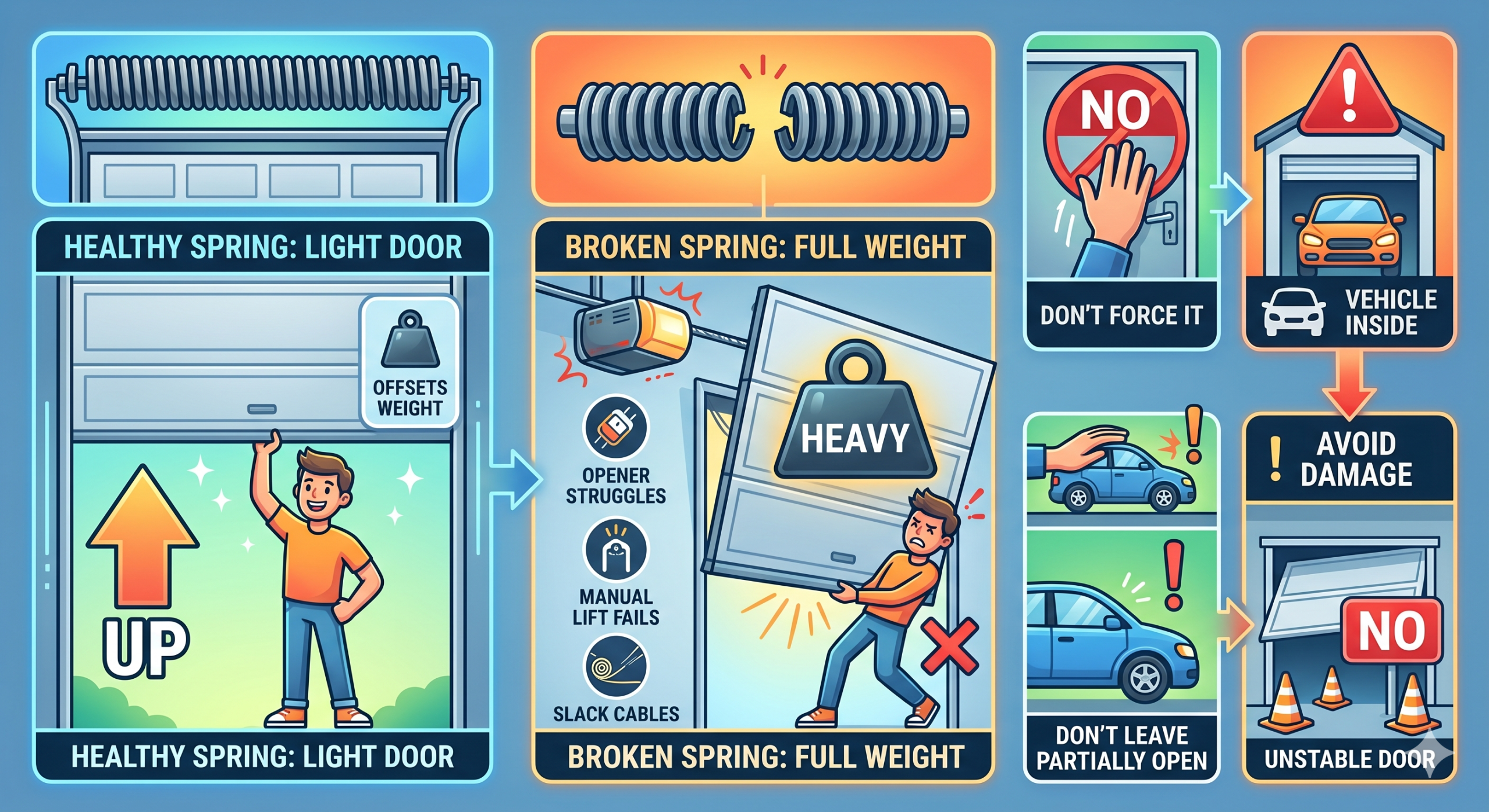
Using a Low-Quality Replacement Spring
Not all torsion springs are manufactured to the same standard. Budget springs made from lower-grade steel have thinner coil wire, less consistent tempering, and weaker resistance to fatigue and corrosion. They may fit the door and function initially, but they reach failure significantly faster than a properly manufactured spring.
This is a common issue when homeowners or less experienced technicians choose the cheapest available replacement without considering the quality difference.
What causes this:
- Choosing a spring based on price alone rather than cycle rating and material quality.
- Ordering a generic online replacement without verifying that the specifications match the door.
- A low-bid repair service cuts costs by using lower-grade components.
Tip: When replacing a spring, ask specifically about the cycle rating and material quality of the spring being installed. The difference in cost between a standard and a high-quality spring is usually modest, but the difference in lifespan can be significant.
If you are trying to decide whether it is time to bring in a technician based on what you are seeing now, When to Call a Pro for Your Garage Door Torsion Spring walks through exactly that decision.
Slowing Down Spring Wear Starts With Understanding the Causes
Most early torsion spring failures are not random. They trace back to one or more of these root causes, and many of them are things that can be addressed before the spring reaches failure. Regular lubrication, matching the spring to the door weight, monitoring cable condition, and scheduling periodic professional checkups all contribute to a spring that reaches, and sometimes exceeds, its rated cycle life.
Homeowners across Lawndale, NC, and Cleveland County who want a professional set of eyes on their torsion spring before it becomes a bigger problem can reach out to Cleveland County Garage Doors. Contact us or give us a call today to schedule an inspection and get an honest assessment of where your spring stands.