
A garage door usually won’t close because of one of a few common issues: blocked or misaligned photo-eye sensors, an obstruction in the door’s path, a remote or wall button that isn’t sending the signal, limit settings that are off, a door that’s out of balance, safety reverse sensitivity set too high, or a failing opener motor or circuit board. Start with the simplest checks first: the sensors and the door’s path, before moving to anything mechanical. If the door still won’t close after that, the problem usually needs a trained hand, and it’s worth calling in garage door service repair before you force anything.
Key Takeaways
- Photo-eye sensors are the single most common reason a garage door won’t close, and the easiest to check first.
- Anything blocking the door’s path, even something small, will stop it from closing.
- A remote that works up close but not from a distance often points to a battery or signal issue, not a broken door.
- Limit settings and sensitivity adjustments should only be changed a little at a time.
- A door that feels heavy or off-balance needs a professional, not a stronger opener.
- If the opener hums but nothing moves, the motor or circuit board may have failed.
DIY-Safe Checks vs. Call-a-Pro Situations
Cause | DIY-Safe to Check | Call a Pro If |
Sensors blocked or misaligned | Yes, clean and realign | Sensors are damaged or wiring is exposed |
Obstruction in the path | Yes, remove and retest | Door still won’t close after removing it |
Remote or wall button issue | Yes, replace batteries, reprogram | Wall button also fails to close the door |
Limit settings off | Minor adjustments only | Door won’t reach the floor after adjusting |
Door out of balance | No | Always, spring tension is dangerous to handle |
Sensitivity too high | Minor adjustments only | Door reverses unpredictably after adjusting |
Motor or circuit board failure | No | Always, electrical repairs need a technician |
1. The Photo-Eye Sensors Are Blocked or Misaligned
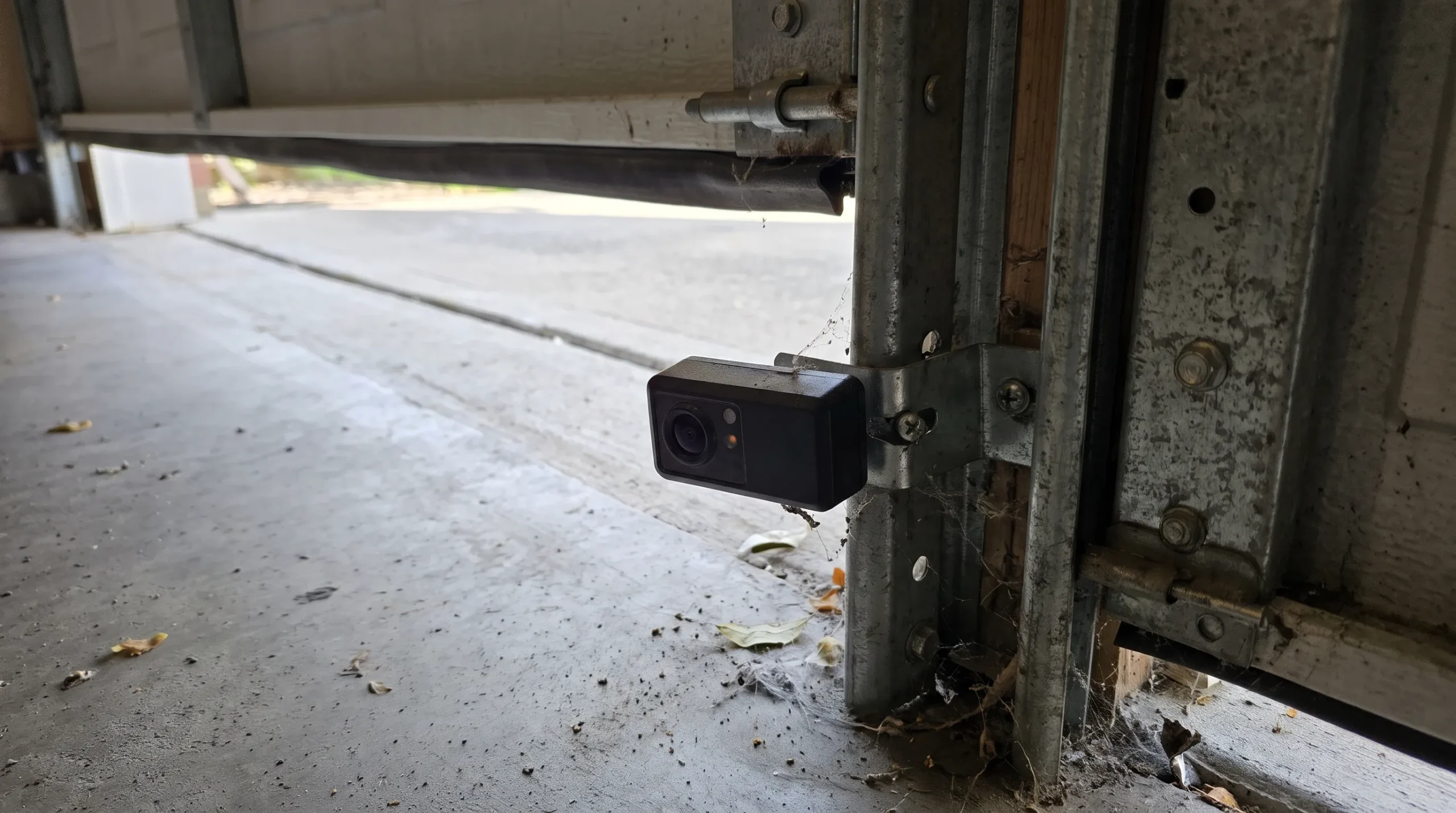
Blocked or misaligned sensors are the most common reason a garage door won’t close, since they’re designed to stop the door rather than let it close blind.
How to Fix Blocked or Misaligned Garage Door Sensors
If your garage door starts to close and then stops or reverses, the photo-eye sensors near the bottom of the tracks are the most likely cause. These small sensors send an invisible beam across the doorway, and if that beam is blocked, dirty, or knocked out of alignment, the door won’t close. Most residential openers place these sensors about six inches above the garage floor, roughly in line with each other on opposite sides of the track, and a small LED on each unit confirms whether the beam is actually connected.
Check:
- Both sensors are clean and free of dust, cobwebs, or glare from direct sunlight.
- The sensors face each other directly. Even a slight bump can throw off the alignment.
- The indicator lights on both sensors are solid, not blinking, which usually signals misalignment.
Call a pro if the sensors are cleaned, aligned, and still not working, or if you notice damaged wiring near either sensor.
If sensor and alignment issues are the specific cause you’re dealing with, read Why Won’t My Garage Door Close All the Way? 5 Sensor and Alignment Issues to Check for a deeper walkthrough.
2. Something Is Blocking the Door’s Path
Even a small object sitting in the doorway can stop the door mid-close, whether or not it directly triggers the sensors.
How to Clear Obstructions Blocking Your Garage Door
Sometimes the fix is simpler than it looks. A toy, a trash can, a stray branch, or even a buildup of debris on the track can stop the door from closing, especially if it’s just barely in the sensor’s beam. Even something as small as a fallen leaf or a low-hanging cobweb can sit directly in that beam without being obvious in dim garage lighting.
Check:
- The full width of the doorway, not just the center, for anything in the path.
- The tracks themselves for debris, ice, or buildup that could catch a roller.
- The area right at the base of both sensors, where small objects are easy to miss.
Call a pro if the door still won’t close after the path is completely clear.
3. The Remote or Wall Button Isn’t Sending the Signal
When the door doesn’t respond at all, the issue is often further upstream than the door itself, starting with whatever is sending the close command.
How to Troubleshoot a Garage Door Remote That Won’t Close the Door
If pressing the remote does nothing, or only sometimes works, the problem is often the remote itself rather than the door. Weak batteries, a lost connection to the opener, or interference from another device can all cause this. Most remotes run on small batteries that typically last one to two years, so age alone often explains a sudden drop in reliability.
Check:
- Replace the remote’s batteries, even if they seem fine.
- Try the wall-mounted button instead. If that works, the issue is likely the remote.
- Stand closer to the door and try again, since range can drop as batteries age.
For a wider look at the most frequent causes behind a garage door that won’t cooperate, The Spruce’s troubleshooting guide for common garage door problems walks through several of these same symptoms in more detail.
Call a pro if the wall button also fails to close the door, since that points to the opener itself rather than the remote.
If the remote is your specific issue, read Why Is My Garage Door Remote Not Closing the Door? 6 Troubleshooting Steps for a full walkthrough.
4. The Limit Settings Are Off
A door that stops short of the floor or won’t close at all often comes down to a setting rather than a mechanical failure.
How to Adjust Garage Door Limit Settings
Limit settings tell the opener exactly how far the door should travel before stopping. If the “close” limit is set incorrectly, the door may stop short of the floor, reverse unexpectedly, or refuse to close at all. These settings can drift slightly over time from vibration or a recent battery change, which is why a door that closed fine for years can suddenly start giving you trouble.
Check:
- Locate the limit adjustment screws or dial on the opener unit, usually near the motor housing.
- Make small adjustments, a quarter turn at a time, and test after each change.
- Confirm the door reaches the floor fully and doesn’t strain against the limit.
Call a pro if the door still won’t reach the floor after a small adjustment, or if you’re not confident locating the correct setting.
5. The Door Is Out of Balance
A door that fights the opener or feels unusually heavy is often carrying more weight than the springs are currently set up to handle.
How to Tell If Your Garage Door Is Out of Balance
A door that feels heavy, closes too fast, or seems to fight the opener is often out of balance. Worn or improperly tensioned springs are the usual culprit, and a fully loaded torsion spring can carry well over a hundred pounds of force, which is exactly why it’s one of the more dangerous issues on this list to handle yourself.
Check:
- Disconnect the opener and lift the door manually. It should move smoothly and stay in place when lifted halfway.
- Watch for one side dropping faster than the other, a sign of uneven spring tension.
- Listen for grinding or popping sounds during operation, which can signal spring wear.
According to DASMA’s safety tips for garage door homeowners, a door that struggles to move smoothly even when operated manually may be out of balance, and spring systems should only be adjusted by a trained technician given how much tension they carry. Routine garage door maintenance can catch this kind of spring wear early, before it turns into a full failure.
Call a pro if the door feels heavy, uneven, or difficult to lift by hand. Spring adjustments are not a DIY task.
6. The Safety Reverse Sensitivity Is Set Too High
A door that closes and then immediately reverses may not be malfunctioning at all, just responding to a sensitivity setting that’s too strict.
How to Adjust Garage Door Opener Sensitivity
Openers are designed to reverse if they meet resistance while closing, a safety feature required by law. But if that sensitivity is set too high, even normal friction can trigger a reversal, making it seem like the door “won’t close” when it’s actually reversing every time. Manufacturers have required this reversing behavior on residential openers since the early 1990s, precisely because a door that doesn’t reverse on contact poses a real safety risk.
Check:
- Locate the force or sensitivity adjustment dial on the opener unit.
- Make a small adjustment and test the door’s full close cycle before adjusting further.
- Confirm the door still reverses properly when it meets an actual obstruction. Never disable this safety feature.
Call a pro if adjusting the sensitivity doesn’t resolve the issue, or if you’re unsure how much to adjust it safely.
If your door is specifically starting to close and then reversing, read Why Does My Garage Door Start to Close Then Reverse? 4 Reasons and Fixes for a closer look at that pattern.
7. The Opener’s Circuit Board or Motor Has Failed
When every simpler cause has been ruled out, the opener’s own internal components become the most likely remaining explanation.
How to Know If Your Garage Door Opener Motor Has Failed
If the opener hums, clicks, or does nothing at all when you try to close the door, and the sensors, remote, and limit settings all check out, the motor or circuit board itself may have failed. Circuit boards typically hold up for a decade or more, so a sudden failure is often triggered by a power surge rather than ordinary wear.
Check:
- Listen for a humming sound with no movement, which often points to a motor issue.
- Check that the opener is receiving power and hasn’t tripped a breaker.
- Note whether the lights on the opener unit turn on at all when you try to operate it.
Call a pro if the opener shows no signs of life, or if you hear grinding, humming, or clicking without any door movement. If the door is stuck open and won’t close at all, emergency garage door repair can get someone out quickly rather than leaving your home exposed overnight.
A Door That Won’t Close Is Trying to Tell You Something
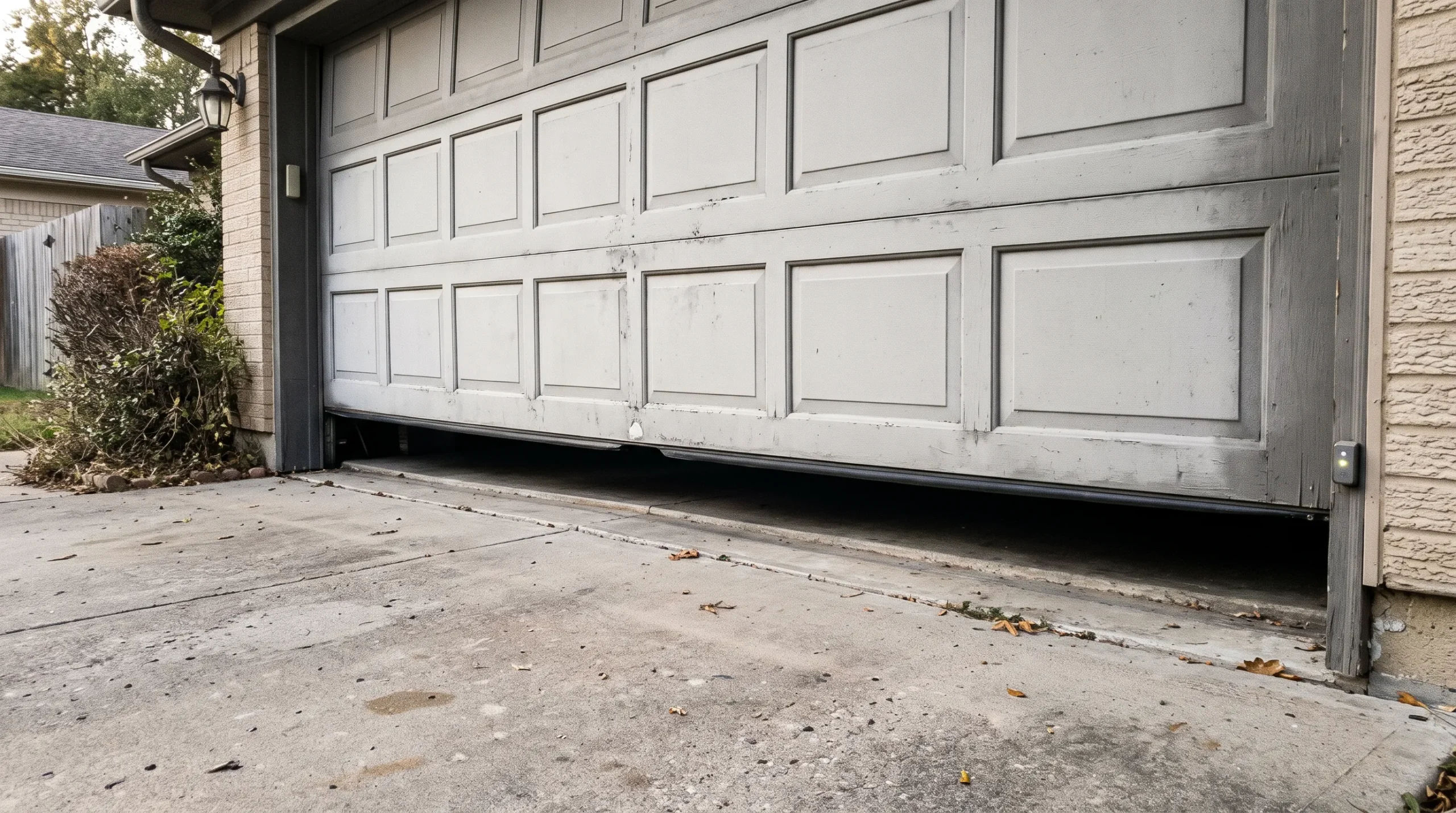
Most of the causes on this list start small: a dusty sensor, a stray box, a battery that’s finally given out. Left alone, though, a door that won’t close can point to something bigger, like a failing motor or a spring under more strain than it should carry.
Cleveland County Garage Doors troubleshoots and repairs these issues for homeowners across Cleveland County, including Shelby and Kings Mountain, and we’re happy to walk you through what we’re seeing before any work begins. Contact us or give us a call if your door still won’t close after trying these steps.