
If your garage door starts to close but stops partway or reverses before reaching the floor, the photo-eye sensors near the bottom of the tracks are almost always the reason. Check five things: whether the sensors are dirty or blocked, whether they’re properly aligned with each other, whether the mounting brackets have loosened, whether sunlight or glare is interfering with the beam, and whether the wiring is damaged or disconnected. These sensors exist to stop the door from closing on a person, pet, or object, so when anything interferes with that beam, the door won’t finish closing. Most of these checks take only a few minutes, and working through them in order helps you rule out the simple causes before turning to garage door service repair for anything more involved.
Key Takeaways
- Photo-eye sensors are the single most common reason a door won’t close all the way.
- The sensors must face each other directly. Even a small bump can throw off alignment.
- Dirt, dust, and cobwebs on the sensor lens can block the beam just as much as an object.
- Direct sunlight hitting one sensor can sometimes interfere with the beam during certain times of day.
- Damaged or chewed wiring near the sensors is a less common but serious cause.
- These sensors are a required safety feature. Never bypass or disable them.
Sensor Symptom vs. Likely Cause
What You See | Likely Cause | Quick Check |
Door stops right before closing | Beam blocked or dirty lens | Wipe both sensors, clear the path |
Door won’t close, no reversal | Sensors misaligned or unpowered | Check the indicator light on each unit |
Works at night, fails during the day | Sunlight glare on the receiver | Shield the sensor or reposition slightly |
Closes fine, then stops randomly | Loose bracket shifting alignment | Check that bracket screws are tight |
Sensor light blinks or won’t stay lit | Damaged or disconnected wiring | Inspect wiring for chew marks or fraying |
1. The Photo-Eye Sensors Are Dirty or Blocked
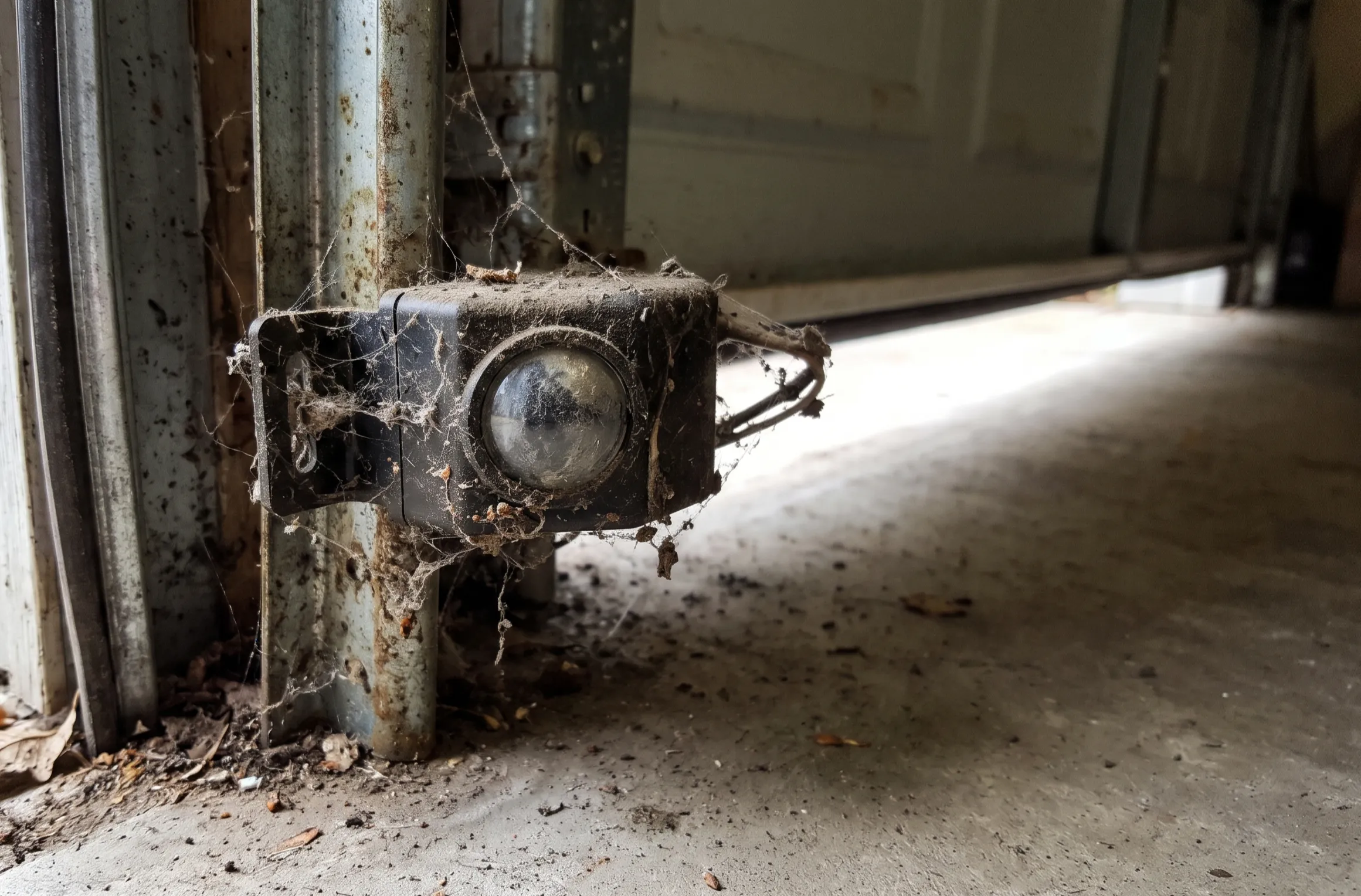
A dirty or blocked lens is the single most common reason a door won’t finish closing, and it’s usually the easiest fix on this list.
How to Clean and Test Garage Door Photo-Eye Sensors
Dust, cobwebs, and everyday garage grime build up on the sensor lenses over time, and it doesn’t take much to interfere with the beam. A film of dust thin enough to be invisible from a few feet away can still scatter the sensor’s beam enough to trigger a false reading, which is why this is the single most common reason a door stops short of closing.
Check:
- Wipe both sensor lenses with a soft, dry cloth.
- Look for anything sitting directly in the beam’s path, even something small.
- Test the door again once both lenses are clean and the path is clear.
A clean lens check alone resolves more “won’t close” calls than anything else on this list, so it’s always worth doing first, even if the cause seems obvious.
Call a pro if the sensors are clean and clear, and the door still won’t close.
If cleaning the sensors doesn’t fully solve it, read Why Is My Garage Door Not Closing? 7 Common Causes and Fixes for the other causes worth ruling out.
2. The Sensors Are Out of Alignment
Even a slight bump to either sensor can throw off the beam enough to stop the door from closing entirely.
How to Realign Garage Door Photo-Eye Sensors
The two sensors need to face each other in a straight line. If one gets bumped, even slightly, by a car, a bike, or stored items, the beam breaks and the door won’t close.
Check:
- Look at the indicator light on each sensor. A solid light usually means proper alignment; a blinking light usually means it’s off.
- Gently adjust the sensor by hand until the light becomes solid.
- Once aligned, tighten the mounting screw so it doesn’t shift again.
These sensors aren’t just a convenience feature. As UL Standards & Engagement explains, U.S. safety requirements have called for an electric eye or equivalent sensor on residential garage door openers since 1993, specifically to help prevent the door from closing on someone in its path. That history is worth keeping in mind before disabling or ignoring a sensor that seems to be misbehaving.
Call a pro if you can’t get both indicator lights solid after adjusting them by hand.
If your door is closing partway and then reversing rather than just stopping, read Why Does My Garage Door Start to Close Then Reverse? 4 Reasons and Fixes, since sensor obstruction is one of the main triggers there too.
3. The Sensor Brackets Have Been Bumped or Loosened
A loose bracket can produce the same symptoms as a misaligned sensor, but the underlying fix is different.
How to Check Garage Door Sensor Bracket Stability
Sometimes the sensor itself is fine, but the bracket holding it has loosened or shifted over time, especially in a garage where the sensors sit low and close to foot traffic.
Check:
- Gently test whether the bracket wobbles or moves when touched.
- Tighten any loose mounting screws.
- Recheck alignment after tightening, since a loose bracket often throws off the beam gradually, not all at once.
A bracket that keeps loosening on its own, rather than after an obvious bump, may point to a mounting issue worth having a professional look at. Regular garage door maintenance usually includes checking bracket stability as part of a routine visit.
Call a pro if the bracket is damaged, cracked, or won’t hold its position once tightened.
4. Sunlight or Glare Is Interfering With the Sensors
Some sensor issues aren’t mechanical at all, they only show up depending on the time of day.
How to Prevent Sunlight From Blocking Garage Door Sensors
If your door closes fine most of the time but fails at a specific time of day, direct sunlight hitting the receiving sensor is a likely culprit. Strong glare can overwhelm the sensor’s ability to detect the beam. Garages that face east or west tend to see this most, since low-angle sun lines up almost directly with the sensor height for a window of a few weeks each season.
Check:
- Note whether the issue happens at a consistent time of day, especially early morning or late afternoon.
- Shield the affected sensor with a small hood or shade if this is a recurring pattern.
- Confirm the door closes normally once the sun has moved.
If this pattern repeats every clear day at roughly the same hour, that timing itself is a strong clue that glare, not a mechanical fault, is the cause.
Call a pro if shielding the sensor doesn’t resolve a consistent, time-of-day pattern.
5. The Sensor Wiring Is Damaged or Disconnected
When cleaning and alignment don’t resolve the issue, the wiring connecting the sensors to the opener deserves a closer look.
How to Inspect Garage Door Sensor Wiring
If cleaning and realigning the sensors doesn’t help, the wiring running from each sensor back to the opener may be damaged, chewed, or disconnected. Rodent damage is a common culprit here, especially in garages with any history of mice or squirrels getting inside, and this cause is far less common than the others but worth checking once the simpler fixes are ruled out.
Check:
- Trace the wiring from each sensor back toward the opener unit, looking for cuts, fraying, or chew marks.
- Confirm the wiring is fully connected at both the sensor and the opener terminal.
- Avoid using wire connectors not rated for outdoor or garage conditions if a repair is needed.
Per DASMA’s safety tips for garage door openers, photo eyes should sit no higher than six inches above the garage floor, so while you’re checking the wiring, it’s also worth confirming the sensors haven’t shifted out of that range. A sensor mounted too high can technically function while still leaving a gap that a small child or pet could pass under undetected.
Call a pro if the wiring looks damaged, or if you’re not comfortable working near the opener’s electrical connections. If the wiring issue is leaving your door stuck open, emergency garage door repair can secure your home the same day.
If it’s your remote rather than the sensors that isn’t working, read Why Is My Garage Door Remote Not Closing the Door? 6 Troubleshooting Steps instead.
A Blocked Beam, Not a Broken Door
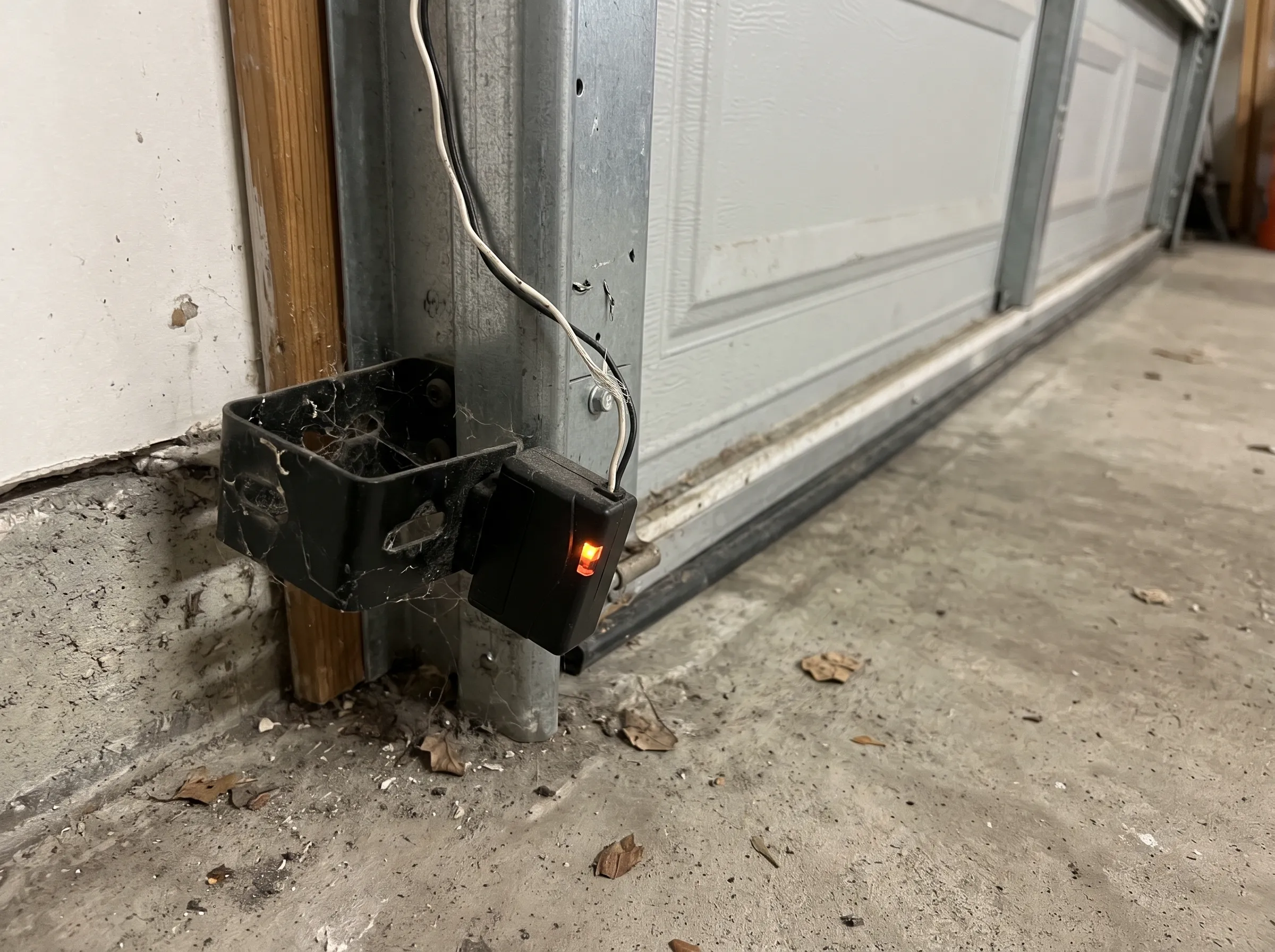
In most cases, a door that won’t close all the way isn’t actually broken. It’s a sensor doing exactly what it’s designed to do: refusing to close because something is interfering with its beam. That distinction matters, because it usually means the fix is quick and inexpensive rather than a sign of a bigger mechanical problem.
Cleveland County Garage Doors handles sensor and alignment repairs for homeowners across Cleveland County, including Shelby and Kings Mountain, and we can usually diagnose the issue in a single visit. Contact us or give us a call if these checks don’t get your door closing again.