
A broken garage door spring can stop your garage door from operating properly, strain the garage door opener, and create serious safety risks inside your home. When spring tension fails, the weight of the door shifts to other components, placing stress on the entire garage door system.
Identifying early warning signs helps prevent further damage and costly repairs. This guide explains how to spot a broken garage door spring, why failure occurs, and what actions to avoid if your garage door spring breaks in Lawndale, NC.
What Happens When a Garage Door Spring Breaks?
When a broken garage door spring fails, the counterbalance system collapses, the door’s weight shifts abruptly onto the opener and lift cables, and stress spreads across structural components that depend on controlled spring tension to function safely.
Common mechanical changes that follow a spring failure include:
- The weight of your garage door transfers directly to the garage door opener.
- Loose cables form along the side of the garage door as tension drops.
- The heavy door drifts unevenly inside the horizontal tracks.
- The opener motor runs, but it cannot fully raise the door.
- Increased pressure builds up along the sides of the door and the support brackets.
Imbalance across lift components follows a predictable progression, and our blog on How to Know If Your Garage Door Spring Is Broken? explains how those warning signs align with the counterbalance failures technicians verify during inspection.
Common Signs of a Broken Garage Door Spring
Loud Snap or Sudden Bang From the Garage
A broken garage door spring often releases stored tension with a sharp, snapping sound that echoes through the garage, signaling an immediate failure of the counterbalance system.
Sounds and reactions commonly reported include:
- A loud bang resembling a firecracker or gunshot.
- The garage door stopped mid-cycle without warning.
- Sudden imbalance across the sides of the door.
- A visible gap is forming in the torsion springs above the door.
- Immediate failure during garage door opening.
Clopay explains that torsion springs store rotational energy as the door lowers, and when that stored torque releases unexpectedly, it produces the explosive sound associated with spring failure and immediate loss of balance.
Door Opens a Few Inches Then Stops
When a garage door spring breaks, the door may lift slightly before the garage door opener detects abnormal resistance and halts movement to protect internal components.
Operational warning signs often appear as:
- The door rose only a few inches before stopping.
- The opener motor is humming while the heavy door remains in place.
- Jerking movement along the horizontal tracks.
- Reversal during the closing cycle.
- Excess strain is placed on the garage door opener.
Partial travel with humming or reversal usually means the opener is fighting the weight of the door, and a targeted garage door opener repair can confirm whether overload damage started after spring tension dropped.
Crooked or Jerking Door Movement
Uneven lifting is a strong indicator that one spring has failed, and the door’s weight is no longer evenly distributed across the garage door system.
Movement irregularities may include:
- One side of the garage door is rising higher than the other.
- Visible tilting across the door panels.
- Binding along the horizontal rails.
- Slack forming in loose cables near one side of the door.
- Increased pressure on the side of the garage door where tension is lost.
An imbalance on one side of the door often indicates a broken torsion spring or an extension spring failure, and long-term, uneven operation can damage the structural components of your garage door system.
Visible Separation in the Spring Coil
A broken garage door spring is frequently confirmed by a visible gap in the coil, especially in torsion springs mounted above the door opening.
Physical indicators to inspect include:
- A clear separation in the tightly wound spring coil.
- A stretched appearance in extension springs.
- Hanging fragments near the torsion shaft.
- Rust buildup and advanced signs of wear.
- Misalignment in the shaft supporting the springs.
A clear coil gap is a direct failure indicator, and scheduling garage door service & repair helps verify spring sizing, lift balance, and related hardware condition before operation causes added strain.
Garage Door Feels Extremely Heavy
Loss of spring tension causes the full weight of the door to shift to the user or opener, turning normal lifting into dangerous heavy lifting.
Manual lifting symptoms often include:
- A heavy door that feels impossible to raise alone.
- Sudden downward pull when using the emergency release cord.
- Increased resistance during garage door opening.
- Noticeable strain on the red cord release mechanism.
- Difficulty keeping the door elevated once lifted.
Weight imbalance following a broken garage door spring increases the risk of injury and may lead to serious injuries if force is applied without proper precautions.
Loose or Slack Cables Near the Drums
Spring failure immediately changes cable tension, potentially causing cables to hang loosely or slip from the drum.
Cable-related warning signs often involve:
- Loose cables dangling along the bottom of the door.
- Uneven cable tension between the sides of the door.
- Frayed strands near the side of the garage door.
- Safety cables appear slack.
- Cable misalignment along the horizontal tracks.
Loose or misfed cables can slip off the drum and cause a sudden door drop, and emergency garage door repairs can stabilize the lift system before shifting cable tension turns the issue into a more serious failure.
Opener Motor Running but Door Not Moving
When the door opener activates but the garage door remains stationary, spring failure often prevents the motor from lifting the door’s weight, forcing the system to operate without proper counterbalance support.
Mechanical symptoms frequently include:
- The motor is humming but not producing vertical movement.
- Grinding noises inside the opener housing.
- Repeated unsuccessful lift attempts.
- Overheating of the garage door opener unit.
- System shutdown due to overload protection.
The Chamberlain Group explains that garage door openers automatically reverse when excessive resistance is detected, which is why a door that travels only a short distance before reversing often indicates an imbalance caused by spring failure.
Why Garage Door Springs Fail Over Time in Lawndale, NC
Garage door springs gradually weaken as repeated cycling, environmental exposure, and mechanical stress reduce their ability to safely support the door’s weight and maintain proper balance within the garage door system.
Contributing factors that accelerate spring failure include:
- Normal wear from thousands of open and closed cycles over time.
- Humidity and seasonal temperature shifts are common in Lawndale, NC.
- Rust formation that increases friction along torsion springs.
- Improper spring sizing during garage door installation.
- Lack of regular maintenance and lubrication.
- Excess strain from an unbalanced heavy door.
- Using the wrong spring for the door’s weight and dimensions.
Humidity exposure, cycle fatigue, and load miscalculation often lead to premature spring damage in this region, and our blog on What Causes a Broken Garage Door Spring in Lawndale, NC?, explains how these stress factors contribute to early failure.
The Risks of Operating a Door With a Broken Garage Door Spring
Operating a garage door after a broken garage door spring failure forces the system to carry the full weight of the door without counterbalance support, placing abnormal stress on structural components and increasing the potential for mechanical failure or injury.
Serious consequences that may develop include:
- Excessive load is placed on the garage door opener and internal drive gears.
- Loose cables are slipping off the drum along the side of the garage door.
- Bending or distortion of horizontal tracks and horizontal rails.
- Sudden door drops that raise the risk of injury.
- The added strain was transferred to the remaining torsion springs.
- Damage is spreading across multiple parts of your garage system.
- Escalating wear that leads to more extensive garage door repair.
Continued operation increases instability and safety risks, and our blog on Is It Safe to Open a Door With a Broken Garage Door Spring? explains how forced lifting or repeated opener use can worsen imbalance and raise injury risk.
Safety reversal standards in Chamberlain Support documentation state that openers must reverse when resistance exceeds the force limit, reinforcing that failed spring tension can trigger a shutdown and strain internal components.

Garage Door Spring Repair vs Garage Door Spring Replacement
When a broken garage door spring throws off the door’s balance, homeowners must decide between a repair and a full replacement.
Comparison Area | Garage Door Spring Repair | Garage Door Spring Replacement |
Structural Integrity | Addresses minor hardware adjustments but does not restore metal fatigue | Installs a new spring rated for the correct door’s weight and cycle life |
Long-Term Reliability | Often temporary if the spring has already weakened | Restores full counterbalance and lifting stability |
Safety Level | May not eliminate high tension risks if the spring is compromised | Reduces risk of injury by restoring proper load distribution |
Cost Efficiency Over Time | Can lead to repeat service calls if failure progresses | Prevents further damage to the garage door opener and lift system |
Recommended Situations | Minor balance corrections or early-stage performance issues | Visible break, severe wear, or complete spring failure |
Metal fatigue and loss of tension usually make repair temporary, while full spring replacement restores proper balance and protects the entire garage door system.
What Not to Do When a Garage Door Spring Is Broken
When a broken garage door spring compromises the balance of the garage door system, certain actions can increase mechanical damage and create serious safety risks.
Avoid the following mistakes:
- Attempting heavy lifting without proper safety gear or support.
- Pull the emergency release cord while the heavy door is partially open.
- Forcing the garage door opener to lift the door repeatedly.
- Adjusting torsion springs or extension springs without the right tools.
- Ignoring loose cables along the side of the garage door.
- Continuing operation after noticing signs of wear or imbalance.
- Purchasing the wrong spring from hardware stores without confirming the correct type of spring.
- Trying diy repairs on components under high tension.
Avoiding these actions reduces the risk of injury, prevents further damage to your garage system, and helps preserve safe, reliable operation of your garage door.
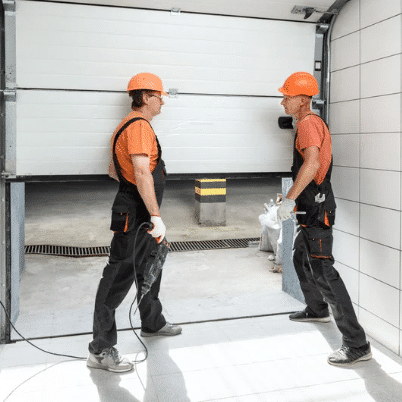
How a Broken Garage Door Spring Affects the Entire Door System
A broken garage door spring disrupts the balance of the entire garage door system by shifting the door’s weight onto unsupported components and altering how force is distributed during movement.
System-wide effects may include:
- Excess strain on the garage door opener and drive assembly.
- Uneven pressure along the horizontal tracks and horizontal rails.
- Increased tension on the remaining torsion springs or extension springs.
- Loose cables are forming along the side of the garage door.
- Warping or stress on door panels due to an imbalance.
- Premature wear across multiple components of your garage door system.
- Reduced stability during garage door opening and closing cycles.
- Higher likelihood of sudden drops or mechanical failure.
System imbalance following spring failure accelerates wear across interconnected parts and increases the risk of injury if proper maintenance and timely repair are delayed.
Take Action Now to Prevent Further Damage From a Broken Garage Door Spring
A broken garage door spring is a critical mechanical failure that affects door balance, lifting performance, and overall system safety. Ignoring early warning signs increases the risk of further damage to the garage door opener, cables, and structural components, and raises the potential for serious injury.
Cleveland County Garage Doors delivers professional garage door repair in Lawndale, NC, using proper tools, safety gear, and proven service methods to restore safe operation. If you notice signs of a broken garage door spring, contact us or give us a call today to schedule expert service and protect your garage door system.