
A broken garage door spring can quickly turn a smooth-operating garage door into a heavy, unbalanced safety concern that affects the entire garage door system. The springs carry the door’s weight, so even a single failure places extra strain on the garage door opener, lift cables, and other critical components.
Homeowners in Lawndale, NC, who recognize the early warning signs of a broken garage door spring can prevent further damage and unexpected breakdowns. This guide explains the most common symptoms, what they reveal about door balance and tension, and when professional service becomes necessary.
What Are the Most Common Signs of a Broken Garage Door Spring?
A broken spring rarely stays hidden, since the loss of counterbalance changes how the door moves, how it sounds, and how it loads the opener during normal cycles.
Common signs that point to a spring problem include:
- The door’s weight suddenly feels heavier than normal during manual lifting or starts acting like a heavy door.
- The door lifts unevenly, sits crooked, or shifts along the horizontal tracks during garage door opening.
- The garage door opener runs, but the door barely moves, stalls mid-cycle, or reverses as the load increases.
- A loud bang occurs in the garage, and a visible gap appears in the torsion springs above the header.
- Loose cables are visible near the side of the garage door, or the door drops faster than usual and feels unstable near the bottom.
When these symptoms appear, review our blog on Signs of a Broken Garage Door Spring (And What Not to Do) to understand which actions can increase risk and lead to further damage.
Simple Checks Homeowners Can Do Without Tools
Listen for a Sudden Bang or Sharp Snap Sound
A broken garage door spring often manifests as a sudden loud bang from the rapid release of tightly wound tension in the garage door system.
Sound-related checks include:
- A loud bang from above the garage door, like a firecracker.
- Sharp snap during garage door opening, followed by stalled movement.
- Single explosive noise heard before visible balance problems appear.
- Echoing sound near the header area instead of near the floor.
- New vibration or rattling that starts immediately afterward.
That sudden impact noise typically signals a spring break and immediate loss of counterbalance, which may require prompt emergency garage door repairs to restore safe operation.
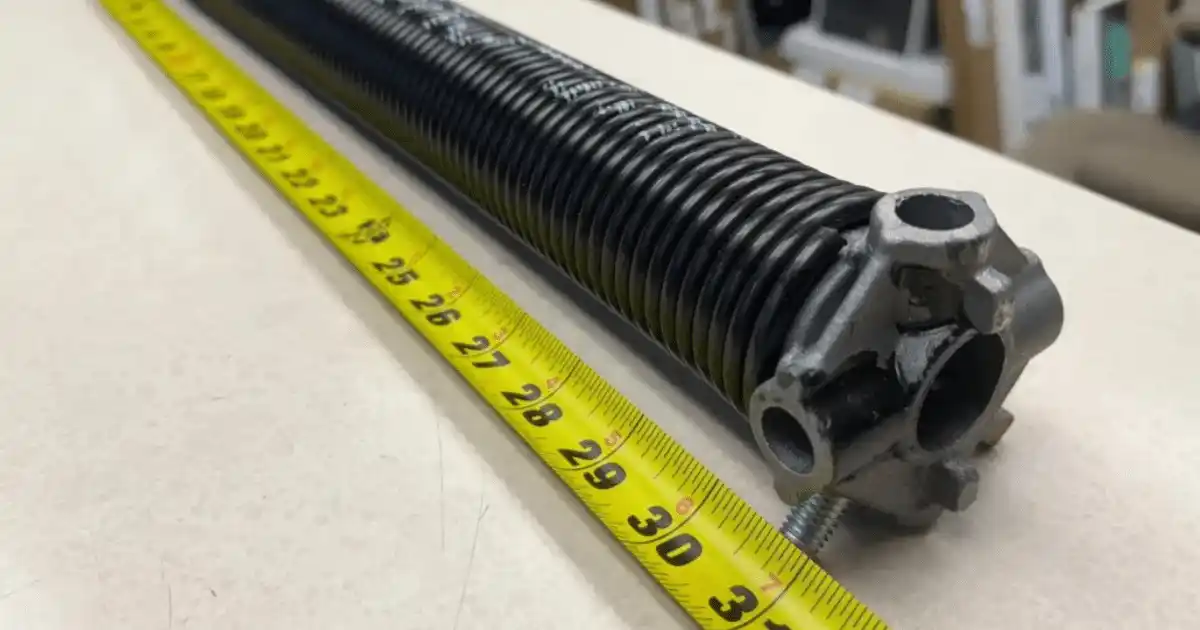
Check for a Visible Gap in the Spring Coil
A clear separation in the spring coil is one of the most reliable visual indicators of a broken garage door spring under high tension.
Visual inspection points include:
- Noticeable gap in torsion springs mounted above the door.
- Split coil forming two sections instead of one continuous spiral.
- The offset winding no longer appears evenly spaced along the shaft.
- Broken torsion spring appearance with visible center separation.
- Spring segment that looks shortened or misaligned.
Clopay explains that a broken torsion spring typically splits into two pieces, with a distinct gap in the coil, confirming structural failure without physical contact.
Watch for a Crooked Door or Uneven Lifting
Loss of spring tension often causes one side of the garage door to lift unevenly, disrupting normal alignment across the tracks.
Alignment checks include:
- Crooked door line where one side rises faster than the other.
- Door panels are tilting as the door moves into the horizontal tracks.
- The side of the garage door is rubbing along the track as it’s being lifted.
- Repeated jerking at the same height during travel.
- Bottom of the door drifting out of level while lifting.
Uneven lifting typically indicates that the door’s weight is no longer balanced correctly and strain is spreading across multiple components.
Notice If the Opener Hums but the Door Barely Moves
A humming garage door opener combined with limited movement often indicates that the motor is carrying the full weight of the door without proper spring support.
Opener performance checks include:
- Motor hums while the door remains close to the floor.
- Short lift of only a few inches before stopping.
- Slower start, heavier than normal operation.
- The opener lights are behaving differently during the cycle attempt.
- The door opener is running while the door feels unusually heavy.
Chamberlain notes that doors feel extremely heavy and may fall quickly when the springs are weak or broken, reinforcing the point that resistance during operation signals a mechanical problem.
Spot Loose or Hanging Lift Cables Near the Tracks
Loose cables often appear when spring tension changes and load distribution across the garage door system becomes uneven.
Cable condition checks include:
- Loose cables hanging near the side of the garage door.
- Uneven cable tension between both sides of the door.
- Cable wrap that looks inconsistent along the drum.
- Hanging loop near the vertical track section.
- Safety cables near extension springs appear slack.
Visible cable slack usually indicates a tension imbalance, and ignoring shifting hardware can escalate into broader structural issues that require full garage door service & repair to prevent additional damage.
Broken Garage Door Spring Symptoms That Affect Door Operation
A broken garage door spring disrupts the counterbalance system, immediately altering how the garage door moves, lifts, and responds during normal operation.
Operational symptoms to watch for include:
- The door feels significantly heavier than normal during manual lifting due to the loss of spring support.
- The garage door drops quickly or slams shut instead of lowering smoothly.
- Door stops mid-cycle or reverses even when the opening is clear.
- Uneven lifting, where one side of the garage door rises faster than the other.
- Garage door opener strains, hums loudly, or struggles under the door’s weight.
- Loose cables appear near the side of the garage door after tension shifts.
- Jerky movement or shaking develops as the door travels along the horizontal tracks.
Loss of proper spring tension shifts the door’s weight onto the opener and lift hardware, and prolonged imbalance can eventually require full garage door replacement if structural strain is ignored.

Why a Spring Failure Changes Door Balance
Spring failure removes the counterbalance support that carries the garage door’s weight, causing a sudden imbalance that affects movement and tension distribution across the garage door system.
Reasons door balance changes include:
- Springs are designed to offset the door’s weight during lifting and lowering.
- Loss of stored tension shifts the full lifting load onto the opener and cables.
- Uneven torque across the shaft disrupts the equal force on both sides of the door.
- Cable drums rotate unevenly when spring tension is no longer matched.
- Controlled descent fails when stored spring energy is suddenly lost.
Learn more about the underlying mechanical and environmental factors in our blog on What Causes a Broken Garage Door Spring in Lawndale, NC?, which explains how wear, climate exposure, and cycle stress contribute to spring failure.
Where Springs Are Located and How Failures Show Up
Garage door springs are mounted in specific locations, and knowing where they sit helps identify how a broken garage door spring appears.
Spring Type | Location on the Garage Door | How Failure Appears |
Torsion springs | Mounted above the garage door on a metal shaft | Visible gap in the coil, loud bang, door feels heavy, or will not lift |
Extension springs | Installed along the upper horizontal tracks on both sides | Stretched or hanging spring, loose cables, uneven lifting |
Dual torsion springs | Centered above the door on a shared shaft | One spring is separated while the other remains intact, causing crooked travel |
Identifying the spring type and its position helps confirm balance failure before further damage occurs.
Can a Spring Fail Without Snapping in Half?
A garage door spring can fail without visibly snapping in half when internal tension weakens, metal fatigue sets in, or the coil stretches beyond its rated cycle life.
Ways a spring can fail without a full break include:
- Gradual loss of tension that reduces lifting support without creating a visible gap.
- Metal fatigue from normal wear weakens the coil over time.
- Surface corrosion that thins the steel and lowers its strength.
- Overextension that stretches the spring beyond its designed cycle range.
- Incorrect spring sizing causes premature weakening under the door’s weight.
- An imbalanced load distribution that strains one spring more than the other.
- Repeated high-cycle use that exceeds the spring’s expected lifespan.
Even without a clean snap, reduced tension can still cause imbalance and indicate a broken garage door spring, which requires professional inspection before further strain affects the garage door system.
When to Stop Using a Garage Door With a Broken Spring
Operating a garage door with a broken spring becomes unsafe when counterbalance failure places uncontrolled weight and strain on the opener and the lift system.
Stop using the door immediately if:
- The door drops quickly or cannot be controlled during closing.
- The door feels unusually heavy and requires excessive force to lift manually.
- One side rises higher than the other, causing a visible imbalance.
- Loose cables or shifting hardware appear along the tracks.
- The garage door opener strains but fails to fully lift the door.
Before attempting to move the door again, read our blog on Is It Safe to Open a Door With a Broken Garage Door Spring?, which explains when operation becomes dangerous.
What a Professional May Recommend After Inspection
After evaluating a broken garage door spring, a technician will assess overall system balance, hardware condition, and safety risks before recommending the appropriate corrective action.
Professional recommendations may include:
- Replace the failed spring with the correct size and cycle rating for the door’s weight.
- Replace both springs in a dual-spring system to restore balanced tension.
- Adjusting cable alignment and drum positioning to ensure even lift.
- Inspecting rollers, hinges, and tracks for stress-related wear.
- Testing garage door opener settings after restoring proper counterbalance.
- Verifying that safety components function correctly before returning the door to service.
A thorough inspection ensures that the broken garage door spring is repaired correctly and that the entire garage door system operates safely and reliably afterward.
Confirm the Signs of a Broken Garage Door Spring Before Damage Gets Worse
A broken garage door spring affects balance, lifting control, and overall safety within your garage door system. Recognizing warning signs such as sudden loud noises, uneven movement, loose cables, or a heavy door can help prevent further damage and reduce safety risks.
Cleveland County Garage Doors provides professional service for homeowners in Lawndale, NC, delivering accurate inspections and precise spring replacement backed by years of experience. If you suspect a spring issue with your garage door, contact us or give us a call today for prompt, reliable service.