
It usually happens without much warning. You hear a sharp, explosive bang from the garage, sometimes loud enough to startle the whole house, and then everything goes quiet. Or you walk out to leave for work, press the button, and the opener hums, but the door does not move. Either way, the situation can feel confusing and stressful if you do not know what you are dealing with.
When a garage door torsion spring snaps, it sets off a chain of effects that most homeowners have never thought about ahead of time. Knowing what to expect, what is safe to do, and what absolutely needs to wait for a professional makes a real difference in how this situation plays out for you. The most important step is getting broken garage door spring repair handled promptly; the longer the door sits out of balance, the more strain it puts on the cables, drums, and opener.
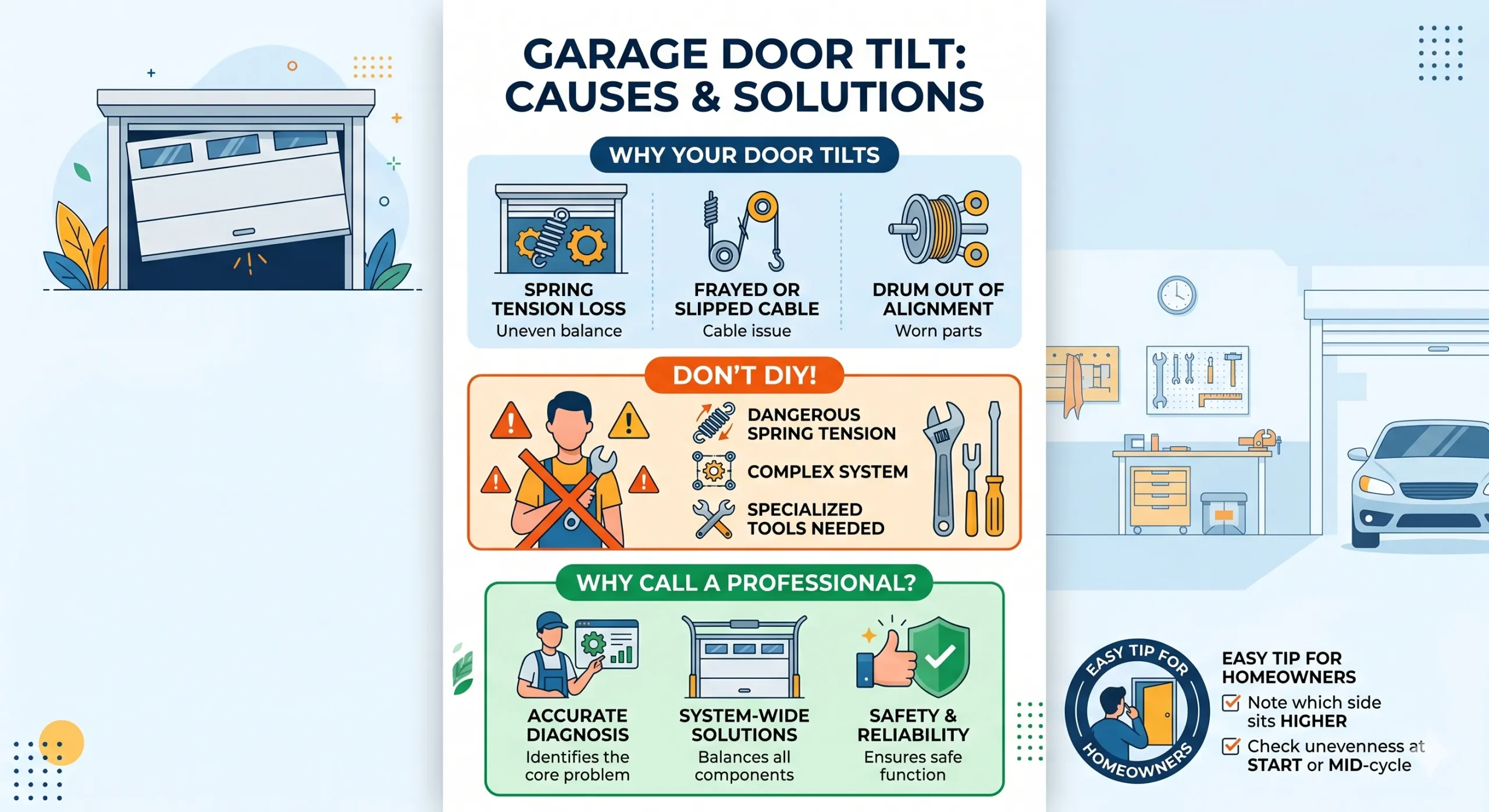
You Hear a Loud Bang, Sometimes Mistaken for Something Else
The first thing most homeowners notice is the sound. A snapping torsion spring releases its stored tension in a fraction of a second, and the noise that comes with it is sharp, sudden, and significant. It is often described as a gunshot, a firecracker, or something heavy falling off a shelf.
Because the garage door is usually closed when this happens, and the sound carries through the house, many homeowners initially think a shelf collapsed, something fell in the attic, or a car backfired outside. It is easy to dismiss at first.
What is actually happening: The spring, which has been wound under high tension through thousands of open-and-close cycles, finally reaches a point where the metal can no longer hold. The coil separates, and the stored mechanical energy releases all at once. That sudden release is what creates the bang.
What to do immediately:
- Do not panic. The spring break is contained to the area above the door and does not pose an immediate threat if you are not standing next to it.
- Stay out of the garage until you have had a chance to assess the situation from a safe distance.
- Do not attempt to open the door, either manually or with the opener, until you have inspected the spring.
To understand what leads a spring to this point, read Why Garage Door Torsion Springs Fail Sooner Than Expected.
The Door Becomes Extremely Heavy and Difficult to Move
The most immediate practical effect of a broken torsion spring is that the garage door becomes very heavy. Under normal operation, the spring offsets most of the door’s weight, making a door that might weigh 150 to 400 pounds feel manageable to lift manually or easy for the opener to raise.
Once the spring breaks, that counterbalance is gone. The door’s full weight now sits on the opener, the cables, and anyone who tries to lift it by hand.
What this means in practice:
- Manually lifting the door will feel significantly harder than usual, often to the point where it cannot be lifted safely by one person.
- The opener, if it runs at all, will struggle against the load and likely reverse, stall, or trigger an overload response.
- The cables may go slack or show unusual tension on one or both sides, depending on how the spring broke.
What to do:
- If you need to get a vehicle out of the garage, do not try to force the door. Forcing it risks damaging the opener, the tracks, or the door panels themselves.
- If the door is partially open when the spring breaks, do not leave it that way. A door held up only by a worn cable without spring support is unstable.
The Opener Runs, but the Door Does Not Move
For most homeowners, this is the moment they realize something is seriously wrong. You press the remote or the wall button, you hear the motor engage, and nothing happens. The door sits completely still while the opener sounds like it is working hard.
This is one of the most common ways a broken spring announces itself, especially if the snap happened overnight or while the door was closed and no one was nearby to hear it.
Why this happens: A residential garage door opener is designed to assist a spring-balanced door, not to lift the full weight of the door on its own. When the spring is gone, the opener suddenly has to manage the entire load. Most standard residential openers cannot do it, so they stall, reverse, or simply run without moving the door.
What not to do:
- Do not keep pressing the button trying to force the door open. Each attempt puts strain on the opener motor and drive system that can lead to additional damage.
- Do not assume the opener is broken just because the door is not moving. The opener itself may be perfectly fine. The spring is the problem.
- Do not pull the emergency release cord and then try to manually lift the door if you are alone. With a broken spring, the door may be too heavy to lift safely, and releasing the opener without spring support removes the only thing keeping the door from dropping.
You May Notice the Spring Has Visibly Separated
Once you confirm the door is not going to open, step back and take a careful look at the torsion spring mounted horizontally above the door. In most cases, a broken spring will show a visible gap, a clear separation in the coil where the break occurred.
The two halves of the spring will still be mounted on the shaft, but there will be a noticeable space between them where the coil has split. On a two-spring system, only one spring may be broken while the other remains intact, though a door with one broken spring on a two-spring setup still will not operate safely.
What to check from a safe distance:
- Look at the center of the spring shaft above the door. A gap or separation in the coil is the most obvious visual confirmation of a break.
- Check whether the cables on both sides of the door are still properly seated in their drums. A broken spring can sometimes cause a cable to slip.
- Do not touch, push, or try to move any part of the spring assembly. Even a broken spring can still have residual tension in sections of the coil.
If you want to catch problems early, read Signs Your Residential Garage Door Torsion Spring Is About to Break before it’s too late.
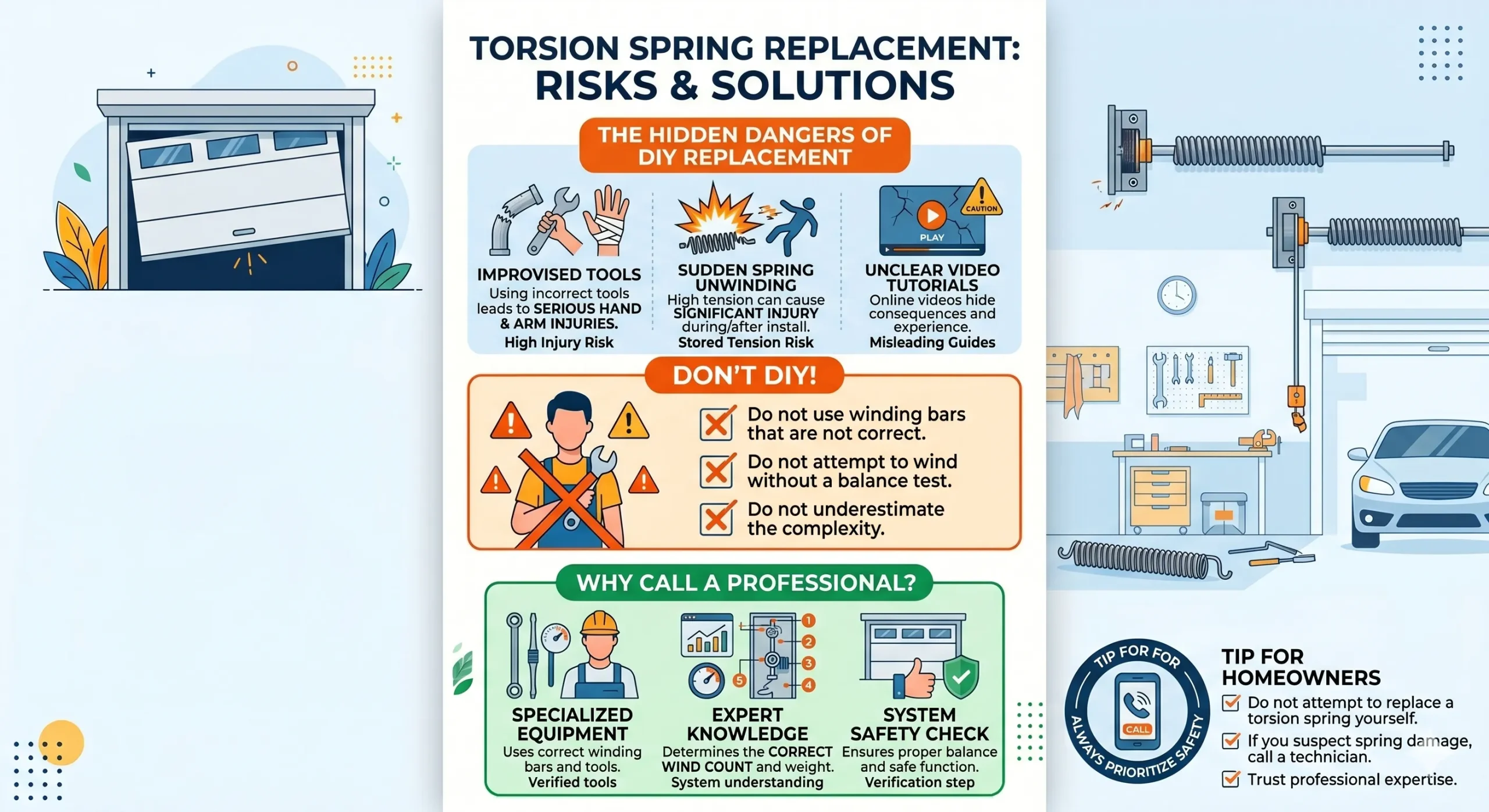
The Door Opener May Sustain Damage If It Was Forced
This is one of the outcomes homeowners do not always consider in the moment. If the spring broke while the door was in motion, or if the opener was run repeatedly after the break, the motor and drive system may have absorbed damage from the overload.
Garage door openers are not built to manage full door weight for extended periods. Running a residential opener against an unsprung door can overheat the motor, strip the drive gear, or trigger the thermal overload protector, which shuts the unit down to prevent a fire.
Signs the opener may have been affected:
- The opener runs for a moment, then clicks off or resets.
- The drive gear makes a grinding sound when the opener engages.
- The opener powers on, but the trolley does not move along the rail.
What to do:
- Stop running the opener as soon as you suspect the spring has broken.
- Have a technician inspect both the spring and the opener before assuming only one component needs attention.
To understand how residential openers are designed and what their mechanical limits are, Angi’s guide to garage door opener styles is a useful starting point.
Getting Out of the Garage Safely When the Door Will Not Open
Being stuck with a car inside the garage and a door that will not move is one of the most frustrating parts of a broken spring. Most homeowners do not know the right way to handle this, and attempting it the wrong way can make things worse. When you are ready to get things back to normal, a reliable garage door repair service can have the spring replaced and the door operating safely the same day in most cases.
Safe steps to manually open a garage door with a broken spring:
- Get at least one other person to help. A door without spring support is heavy enough that trying alone creates a real injury risk.
- Pull the red emergency release cord to disconnect the opener from the door.
- With both people lifting together from the bottom of the door, raise it slowly and carefully.
- If the door moves, prop it open securely with a sturdy object before driving the vehicle out. Never rely on a person to hold the door up.
- Once the vehicle is out, carefully lower the door back down and do not use it again until the spring has been replaced.
Important: This is a one-time emergency measure, not a workaround. Operating a door repeatedly without a functioning spring risks cable failure, track damage, and the door dropping without warning.
For a broader look at how garage door systems are built and what safe manual operation involves, This Old House covers residential door mechanics in practical detail.
What to Expect During the Repair Process
Once a torsion spring breaks, the repair process is straightforward for a trained technician but not something a homeowner should attempt. Spring replacement involves releasing and resetting high levels of mechanical tension using specialized tools. It is one of the few garage door repairs that carries a genuine injury risk if done incorrectly.
What the repair typically involves:
- A technician will inspect the broken spring along with the cables, drums, and opener to assess whether any secondary damage occurred.
- The spring will be measured and matched to the door’s weight and dimensions before replacement.
- On a two-spring system, both springs are typically replaced at the same time since the second spring has experienced the same wear as the one that broke.
- The technician will test the door balance and opener function after installation to confirm everything is working correctly.
The repair is generally completed in a single visit and does not require the door to be taken off its tracks in most cases. How long it takes and what it costs can vary depending on the spring type, door size, and whether additional components need attention.
Know the right time to get expert help, read When to Call a Pro for Your Garage Door Torsion Spring.
Handle It Safely, Then Get It Repaired
A snapped torsion spring is one of the more disruptive things that can happen to a garage door, but it is also one of the most manageable when you know what you are dealing with. The door is not destroyed, and the situation is not dangerous as long as you avoid trying to force things that are not designed to work without a functioning spring.
If you are in Lawndale, NC or the surrounding Cleveland County area and your spring has snapped, Cleveland County Garage Doors is ready to help. Contact us or give us a call today, and we will get a technician out to assess the situation, replace the spring, and have your door working properly again.